Welcome to XiYu

How to Choose a Precision Metal Stamping Manufacturer in China
Learn how to choose a metal stamping manufacturer in China by reviewing engineering support, Mold capability, materials, quality planning, and project fit.

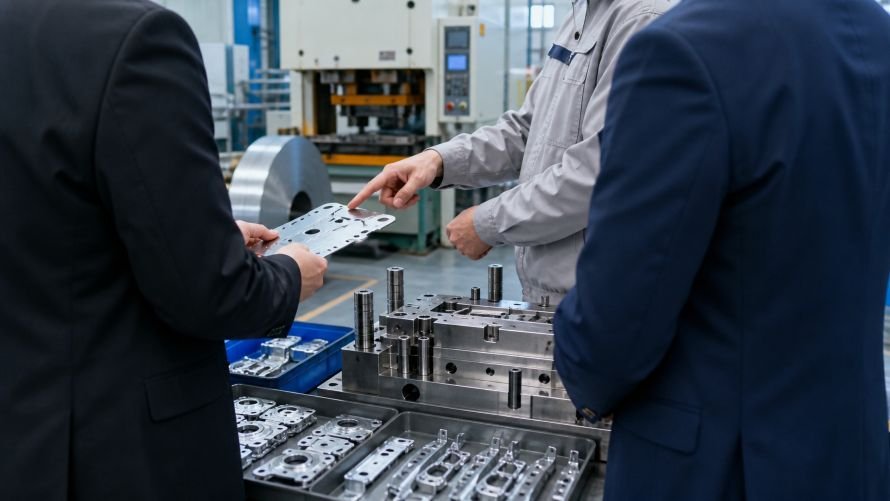
Choosing a metal stamping manufacturer in China is not only about finding a competitive quotation. The right supplier should be able to understand the part, identify manufacturing risks early, communicate clearly, and support the project from sample evaluation through regular production.
For buyers sourcing custom metal parts, the most useful evaluation combines technical fit and working fit. A supplier may appear capable based on a process list, but the real question is whether its engineering approach, Mold planning, material knowledge, quality process, and communication style suit your specific project.
This guide explains what to review before selecting a precision metal stamping manufacturer in China and how to make the conversation with a potential supplier more productive.
Start With a Clear View of Your Part Requirements
A supplier can give a more meaningful response when the project information is complete. Before comparing manufacturers, prepare the latest available information about the part and its intended use.
Useful inputs include:
- 2D drawings and, where available, CAD files.
- Material preference, thickness, and surface requirements.
- Estimated quantity and expected order pattern.
- Critical dimensions, fit points, and functional features.
- Required forming, threading, welding, finishing, or assembly steps.
- Packaging expectations and handling concerns.
- Existing samples, photos, or mating-part information when relevant.
This information helps the manufacturer determine whether the part is suitable for a stamping route and which questions should be resolved before production planning begins.
If your team is new to the process, begin with the fundamentals of precision metal stamping. A shared understanding of the process makes it easier to evaluate supplier recommendations and compare proposed manufacturing routes.
Evaluate Whether the Supplier Understands the Manufacturing Route
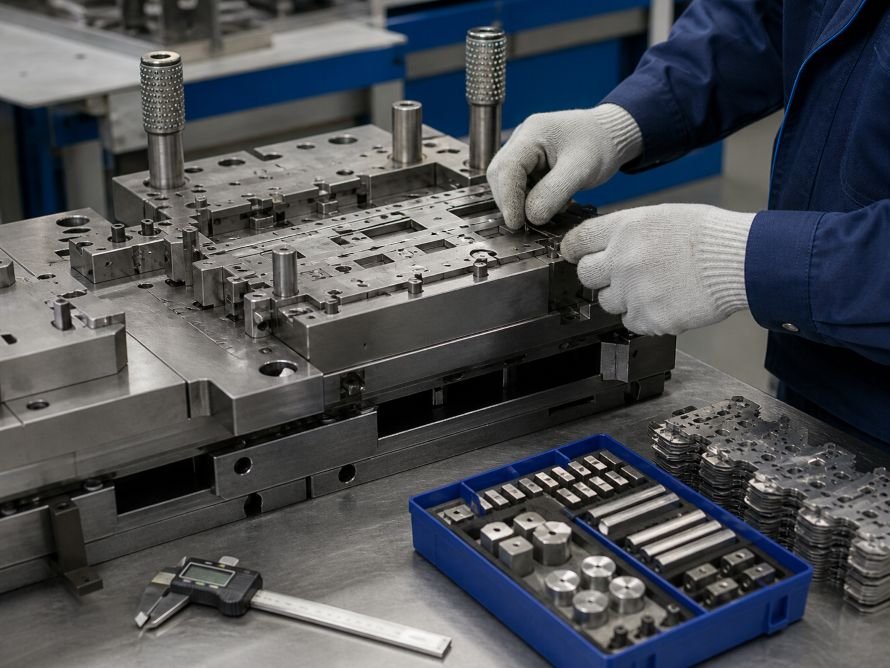
A good supplier evaluation should move beyond “Can you make this part?” and ask “How would you make it reliably?”
The answer should reflect the part’s geometry, material, quantity, quality needs, and downstream use. A thoughtful manufacturer will usually ask questions before finalizing a recommendation instead of treating every stamped component as the same type of project.
Review the Stamping Process Fit
Some parts are relatively straightforward flat blanks. Others require multiple holes, bends, forms, or closely controlled features. The production route should reflect that difference.
For recurring parts with multiple operations, progressive Mold stamping may be relevant because it can combine operations as material advances through the process. For other parts, a different approach may be more appropriate depending on the design and project stage.
Ask a potential supplier:
- Which operations are needed for this part?
- Which features require the most attention during forming?
- Is the proposed route appropriate for the expected quantity?
- Are there secondary operations that should be considered separately?
- What design details could affect process stability?
The purpose is not to force a particular answer. It is to understand whether the supplier can explain the logic behind its recommendation.
Review Mold Capability and Planning
The Mold is central to repeatable stamping production. A manufacturer should be able to discuss the Mold approach in practical terms, including the operation sequence, maintainability, part handling, and inspection needs.
Useful discussion points include:
- Whether the part is suited to a single-operation, transfer, or progressive Mold approach.
- How the Mold plan relates to expected volume and design maturity.
- How design changes will be reviewed if the project is still evolving.
- Which features may require closer attention during Mold design.
- How the supplier plans to protect critical dimensions and part form during ongoing production.
This is especially important when the part includes several formed features or when a small design change could affect several operations. The goal is not to request confidential Mold details. It is to confirm that the supplier is planning the process rather than simply reacting to the drawing.
Check Material Knowledge for Your Application
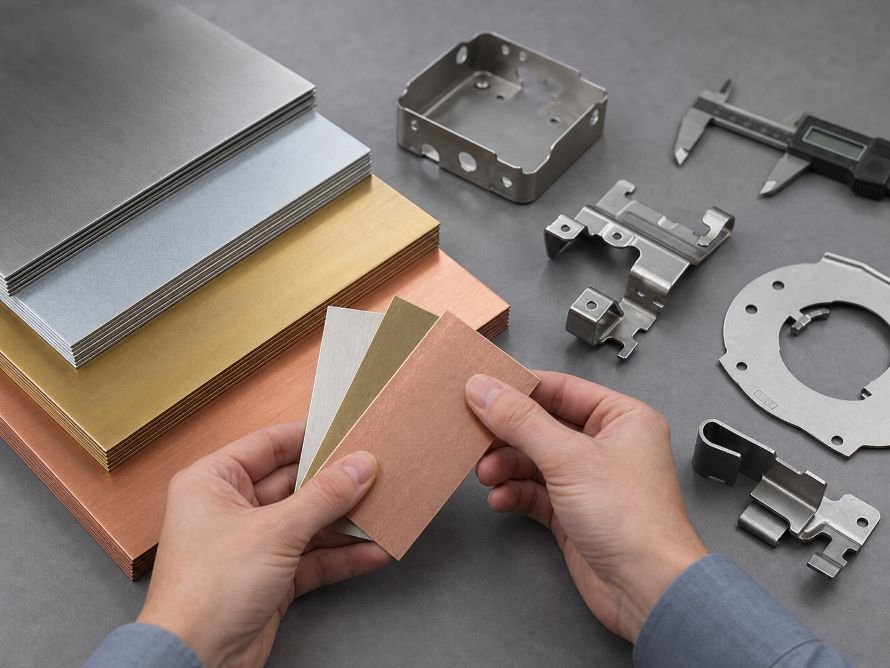
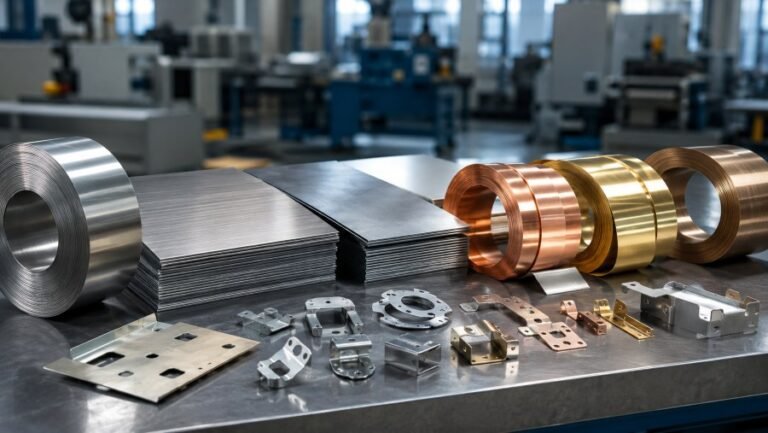
Material selection affects formability, strength, corrosion behavior, surface appearance, cost, and the overall stamping route. The manufacturer should be comfortable discussing the material in relation to the component’s function instead of only naming a generic category.
A useful starting point is our overview of common metal stamping materials. It can help buyers organize early questions around material type, thickness, forming needs, and performance expectations.
For common material decisions, you may also need a more focused comparison:
- Stainless steel stamping is often considered where corrosion resistance, strength, or appearance matters, but the forming route should still match the selected grade and feature design.
- Aluminum stamping may be relevant when weight, corrosion behavior, and formability are part of the decision.
- Brass versus copper for stamped metal parts is a useful reference when conductivity, formability, appearance, or material behavior must be weighed together.
When evaluating a supplier, ask how the proposed material will interact with the part geometry, bends, holes, forms, and finishing requirements. A supplier should also be willing to flag where a drawing leaves an important material question unresolved.
Make Tolerance Requirements Specific and Functional
Tight tolerances can be necessary, but they should be applied where the part function genuinely requires them. A blanket tolerance strategy can make a drawing harder to manufacture and inspect without improving the finished product.
The key questions are:
- Which dimensions control assembly fit?
- Which features are function-critical?
- Which dimensions can use a broader practical range?
- How will important characteristics be checked?
- Does the drawing distinguish between critical and non-critical features?
Read how tight metal stamping tolerances can be before discussing a detailed tolerance plan. It gives useful context for separating critical dimensions from general dimensions.
The supplier’s response matters as much as the tolerance number itself. A capable manufacturer should ask how the part functions, identify features that deserve closer control, and avoid making unsupported promises about universal precision.
Ask How the Supplier Handles Quality Planning
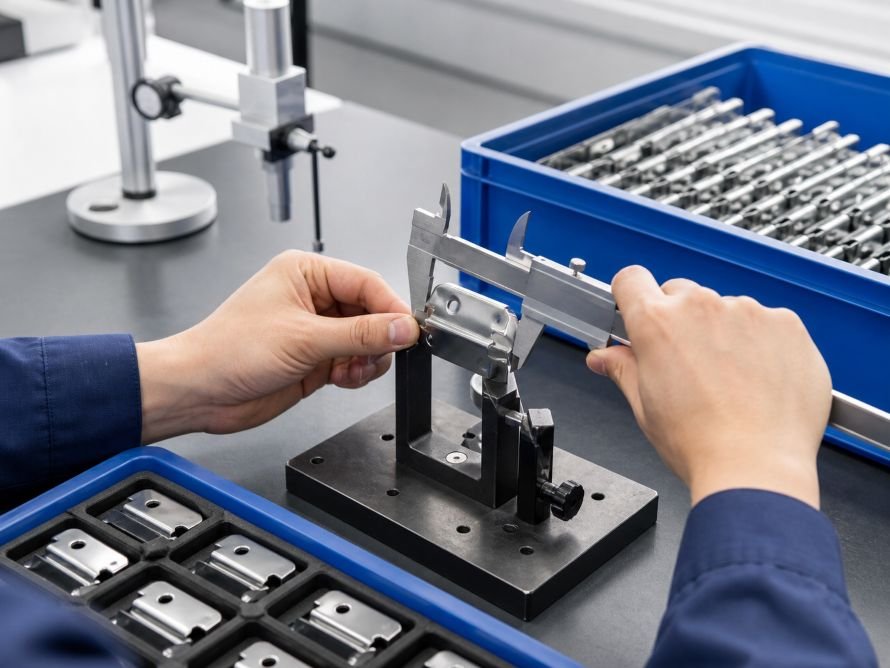
Quality should be considered before the first production order, not only after a problem appears. The supplier does not need to provide a long generic quality statement. More useful is a clear explanation of how it will check the features that matter to the component.
A productive quality discussion can cover:
- Which dimensions and features are important to inspect.
- What sample or first-run review is needed before regular production.
- How the team will handle visual, functional, and dimensional checks.
- How concerns will be communicated if a drawing requirement is unclear.
- What information should be agreed before repeat orders begin.
Burrs are one example of why process and inspection planning should be connected. They can affect handling, fit, appearance, or downstream assembly depending on the part. Our guide to stamping burrs explains the factors buyers should discuss when burr control is important.
The aim is not to demand every possible inspection for every part. It is to make sure that the inspection approach aligns with the part’s intended use and the features that create real risk.
Look for Useful Engineering Communication and DFM Support
The strongest supplier relationships are collaborative. A manufacturer should be able to raise questions early, explain concerns in clear language, and offer practical options when the drawing presents a manufacturing challenge.
Design-for-manufacturability discussions can be particularly valuable when a part is new, has many operations, or needs to move from a prototype stage to recurring production.
Signs of useful engineering support include:
- Questions that show the supplier has reviewed the drawing carefully.
- Clear explanations of how a proposed change may affect manufacturing.
- A distinction between functional requirements and avoidable complexity.
- Practical feedback on material, forming sequence, tolerances, or part handling.
- Willingness to align on sample results before committing to a production route.
For early-stage projects, review the difference between prototype stamping and production stamping. Prototype work can help confirm fit, material behavior, and design intent before a production-focused Mold plan is finalized.
Good DFM support should improve decision-making. It should not replace the customer’s design authority or introduce unapproved changes.
Compare Cost With the Full Manufacturing Picture
Price is important, but a low initial quotation does not always represent the lowest project cost. Buyers should look at the manufacturing plan behind the quote.
Cost can be affected by:
| Cost Area | Questions to Ask |
|---|---|
| Material | Is the selected material appropriate for the function and forming needs? |
| Mold strategy | Does the Mold plan match the part complexity and expected volume? |
| Part design | Are there features that add unnecessary operations or risk? |
| Quality planning | Are inspection needs defined for critical features? |
| Secondary operations | Are finishing, assembly, handling, or packaging requirements clear? |
| Change management | What happens if the drawing changes after the process is planned? |
A supplier should be able to help you distinguish between a cost that supports a stable manufacturing plan and a cost that may leave important questions unanswered.
For a more detailed buyer and engineering perspective, see how to reduce metal stamping production costs. It covers practical factors such as DFM, material utilization, Mold planning, and quality prevention.
Review Production Management and Project Communication
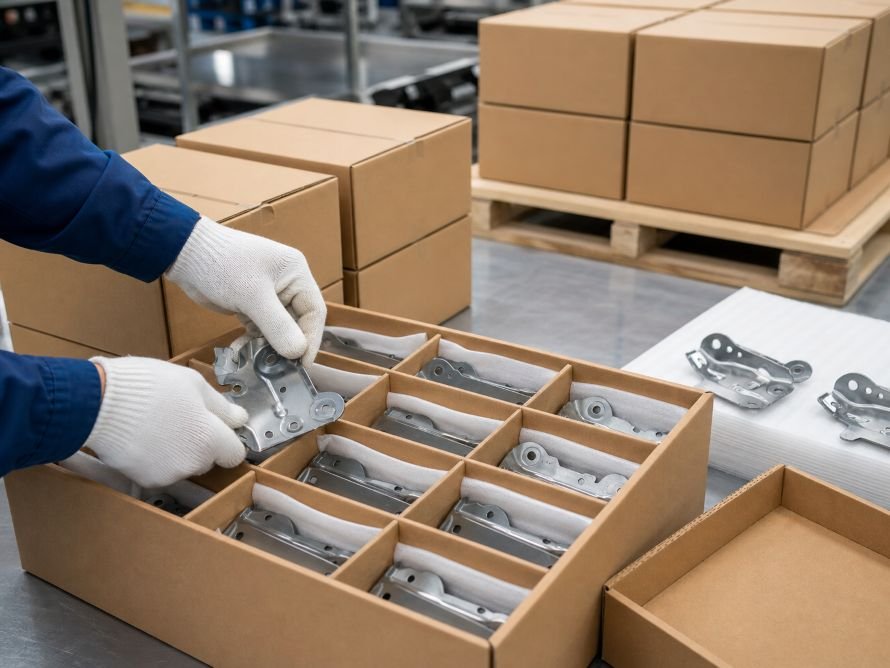
Once a part moves beyond the quotation stage, the working process becomes important. The manufacturer should have a clear way to manage drawings, revisions, samples, feedback, production confirmation, and delivery communication.
Before choosing a supplier, ask how it handles:
- Drawing revisions and version confirmation.
- RFQ questions and quotation assumptions.
- Prototype samples or first-run review.
- Changes in material, finish, or packaging requirements.
- Production updates and issue communication.
- Packing methods for parts with surface or shape protection needs.
For overseas projects, communication should be specific enough that both sides understand what has been confirmed and what still needs a decision. This reduces the risk of assumptions being carried from quotation into production.
Use a Structured Supplier Comparison
When comparing several metal stamping manufacturers in China, evaluate each supplier against the same project criteria. This prevents a decision from being based only on the fastest reply or the lowest initial price.
| Evaluation Area | What to Review |
| Technical fit | Does the supplier understand the part, process needs, and project stage? |
| Mold planning | Can it explain a practical Mold and production approach? |
| Materials | Does it discuss material choice in relation to function and forming? |
| Tolerances | Does it focus on critical functional dimensions? |
| Quality planning | Are inspection points and sample review discussed clearly? |
| Engineering support | Does it raise useful DFM questions and explain options? |
| Communication | Are questions, assumptions, and revisions handled clearly? |
| Commercial fit | Does the quotation reflect a complete and realistic scope? |
| Packaging and logistics | Are part protection and shipment requirements understood? |
This approach creates a more balanced comparison. It also helps buyers identify which questions need to be resolved before placing an order.
A Practical Checklist Before You Request a Final Quote
Before asking a preferred supplier for a final quotation or production recommendation, confirm that you have shared:
- The latest drawing revision and available CAD files.
- Material, thickness, and finish requirements.
- Estimated order quantity and demand pattern.
- Critical dimensions, functional features, and assembly interfaces.
- Prototype or sample needs, if applicable.
- Required secondary operations.
- Inspection expectations for important features.
- Packaging requirements and shipment destination.
- Any target timing that affects project planning.
The more clearly these inputs are defined, the easier it is for the supplier to provide a relevant response and for your team to compare options fairly.
FAQ
What should I look for in a metal stamping manufacturer in China?
Look for a supplier that can explain how it would manufacture your part, not only confirm that it can quote it. Review engineering communication, Mold planning, material understanding, quality planning, and how it manages drawings and changes.
How can I compare two stamping suppliers fairly?
Give both suppliers the same drawing revision, quantity estimate, material requirements, tolerance information, finishing needs, and packaging expectations. Then compare the proposed manufacturing approach and assumptions as well as the price.
Should I choose a supplier based on the lowest quotation?
Price is one part of the decision, but the quote should be reviewed alongside the process plan, Mold approach, material assumptions, quality scope, and communication quality. An incomplete scope can create additional cost or delay later.
When should I request prototype stamped parts?
Prototype parts are useful when the design needs physical validation, fit checks, material evaluation, or early testing before a production-focused route is finalized. They can help the team resolve questions before larger commitments are made.
What information helps a stamping supplier evaluate my RFQ?
Provide the latest drawing or CAD file, material and thickness, estimated quantity, critical dimensions, required finishing, packaging needs, and relevant application details. Samples or mating-part information can also help when available.
Discuss Your Custom Metal Stamping Project
A useful supplier conversation starts with the drawing, the application, and the questions that still need to be answered. Contact Xiyu Hardware to share your custom metal part requirements, drawings, material preferences, and estimated quantity for a practical manufacturing discussion.