Welcome to XiYu

Aluminum Stamping: What Engineers Should Know

Aluminum stamping is a practical manufacturing route for producing lightweight metal parts at repeatable volumes. It can combine cutting, piercing, forming, embossing and drawing operations into an efficient process, making it suitable for brackets, covers, shields, clips, housings and many other engineered components.
For buyers and engineers, the right question is not simply whether aluminum can be stamped. It is whether the selected alloy, temper, geometry, tolerance and production volume support a stable process. A clear review before tooling begins can reduce avoidable revisions later.
If you are new to the process, start with our guide to precision metal stamping for a broader look at how stamped components are produced.
Why Aluminum Is Commonly Used for Stamped Parts
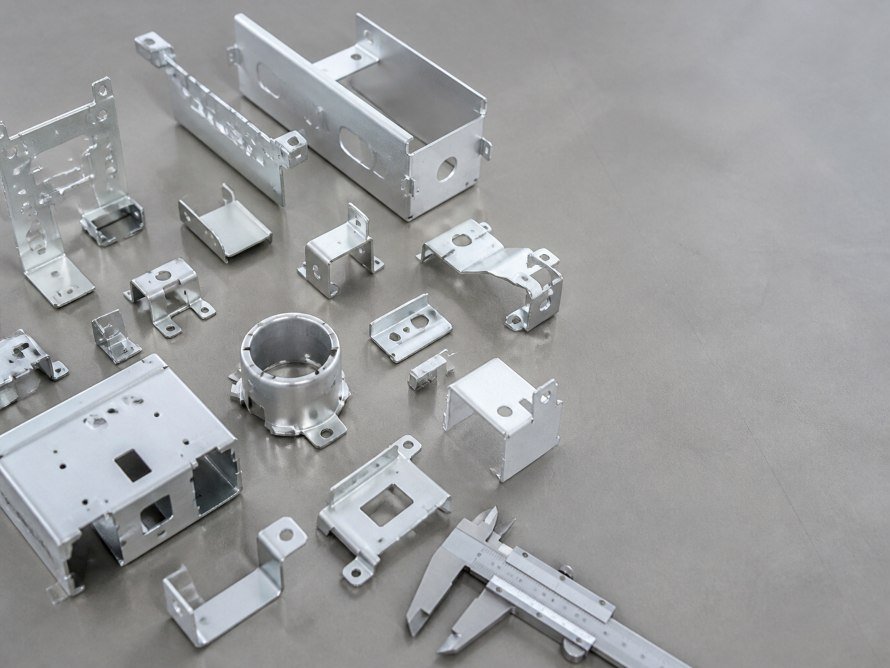
Aluminum is often selected when a component needs lower weight, reasonable corrosion resistance and efficient production. Its properties can support a wide range of formed parts, but the final result still depends on matching the material condition to the part design and forming method.
| Consideration | Why It Matters in Aluminum Stamping | What to Review Early |
|---|---|---|
| Low density | Helps reduce component weight | Functional load and stiffness requirements |
| Corrosion resistance | Can suit many indoor and protected outdoor uses | Operating environment and finishing needs |
| Formability | Supports bending, drawing and forming in suitable conditions | Alloy, temper, bend radius and draw depth |
| Electrical and thermal conductivity | Useful for certain electrical or heat-management parts | Contact surfaces, coatings and joining method |
Compared with heavier materials, aluminum can help reduce mass without automatically making a part simpler. Thin sections, deep forms, narrow flanges and tight cosmetic requirements may require more careful DFM review.
Choose the Alloy and Temper Around the Part Function
“Aluminum” is not a single material choice. Alloy family and temper influence strength, formability, surface condition and response to forming. A material that works well for a simple bracket may not be the best option for a deeper drawn housing or a part requiring more demanding secondary operations.
| Material Decision | Typical Effect on the Stamping Process | Engineering Question |
| Alloy family | Influences strength, corrosion behavior and formability | What performance does the finished part need? |
| Temper | Affects how readily the material bends or forms | Can the geometry be formed without cracking or excessive springback? |
| Sheet thickness | Affects stiffness, tool clearance and press behavior | Is thickness aligned with functional load and tolerance needs? |
| Surface condition | Can affect appearance, friction and later finishing | Is the visible surface cosmetic, coated or joined to another component? |
A supplier should review the material callout together with the drawing rather than treating it as an isolated purchasing item. For a broader material-selection overview, see What Materials Are Commonly Used for Metal Stamping?.
Design Considerations for Aluminum Stamping
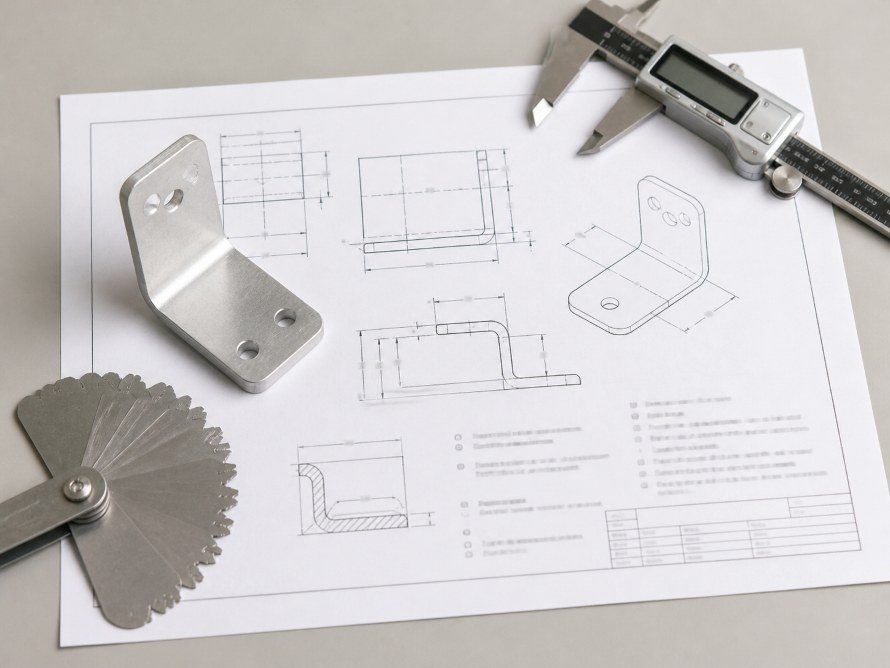
The most cost-effective aluminum stamped parts are usually designed with production in mind from the beginning. Small drawing changes can improve material flow, reduce stress concentration and make tooling more dependable.
Bend Radii and Forming Direction
Sharp inside bends can increase the risk of cracking, especially when material condition, grain direction or geometry is not favorable. A practical bend radius should be reviewed in relation to material thickness and selected alloy. Where possible, avoid placing critical holes or slots too close to a bend line, since distortion may affect their final location.
Springback and Dimensional Control
Aluminum can spring back after forming. This does not prevent accurate production, but it must be considered in tool design and inspection planning. Critical angles, flatness requirements and mating features should be clearly identified so the tooling approach and process checks can focus on what matters most.
Holes, Slots and Narrow Features
Pierced features should leave enough material around edges and formed areas. Very narrow webs, closely spaced holes or features near a drawn wall can create avoidable distortion or tooling wear. A DFM review can identify whether a feature should be moved, resized or produced in a different operation.
| DFM Area | Practical Guidance | Benefit |
| Bends | Use realistic radii and leave clearance around bends | Reduces crack and distortion risk |
| Critical dimensions | Mark functional dimensions clearly | Supports targeted process control |
| Pierced features | Keep adequate material between holes, edges and formed areas | Improves part integrity and tool life |
| Formed geometry | Review depth, wall transitions and access for tooling | Helps confirm a repeatable process |
Tooling and Process Planning
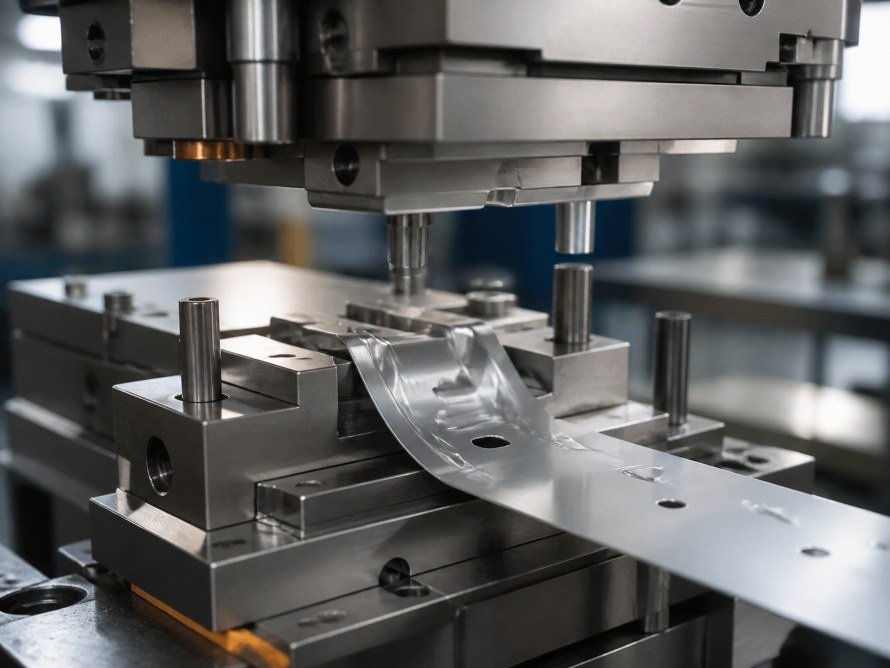
For repeat production, the tooling concept has a direct effect on consistency, cycle time and part cost. A simple part may be produced in a single-operation die, while higher-volume parts with multiple features may benefit from progressive tooling.
A progressive die can perform several operations as strip material advances through the tool. This approach may improve throughput and reduce handling for suitable part designs. Learn more in Progressive Die Stamping: How It Works and When to Use It.
Before tooling is released, review:
- Annual and batch volume expectations
- Material specification, thickness and finish
- Critical dimensions and inspection requirements
- Burr direction and edge-condition expectations
- Secondary operations such as tapping, welding, assembly or coating
- Packaging needs for cosmetic or easily scratched parts
Tooling should be planned around the real production requirement, not only the first sample. This is especially important when a part will move from prototype quantities to recurring orders.
Common Challenges in Aluminum Stamping
Aluminum stamping has clear advantages, but it also requires attention to several process risks.
| Challenge | Potential Effect | Practical Response |
| Springback | Angle or profile variation after forming | Use compensated tooling and verify critical geometry |
| Surface marking | Cosmetic defects on visible parts | Review handling, lubrication, tooling finish and packaging |
| Tearing or cracking | Failure at sharp bends or deep forms | Reassess material condition, radius and forming sequence |
| Burr control | Edge quality concerns during assembly | Define burr direction and edge requirements early |
Surface protection deserves particular attention. Aluminum parts may be handled, stacked, transported, coated or assembled after stamping. If appearance matters, requirements for scratches, marks, protective film or packaging should be agreed before production.
When corrosion resistance and higher strength are the leading priorities, stainless steel may be the more suitable choice for some applications. Our article on stainless steel stamping explains the related trade-offs.
Typical Applications for Aluminum Stamped Parts
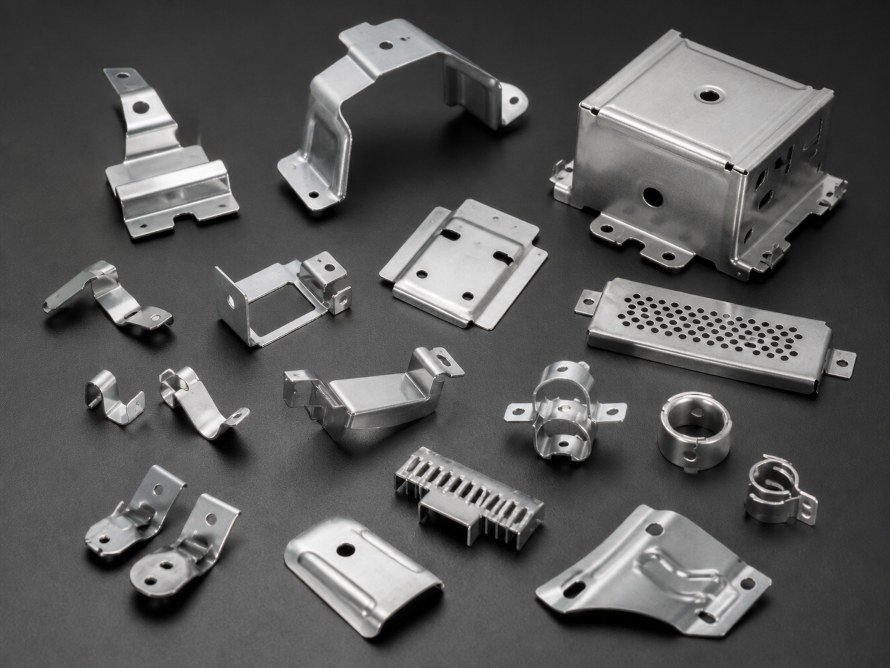
Aluminum stamped components are used across industries where light weight, repeatability and efficient fabrication are important.
| Application Area | Typical Aluminum Stamped Components | Key Requirement |
| Automotive and mobility | Brackets, shields, clips and structural subcomponents | Weight, fit and production consistency |
| Electronics | Enclosures, brackets, shielding parts and mounting plates | Geometry, surface condition and assembly compatibility |
| Appliances | Panels, covers, frames and internal supports | Appearance, stiffness and repeatability |
| Industrial equipment | Guards, brackets, housings and mounting hardware | Function, durability and serviceability |
The final manufacturing route may include stamping plus secondary operations. Depending on the drawing, a project may also require CNC machining, tapping, deburring, welding, surface treatment or assembly. Reviewing the full part lifecycle early helps prevent a stamped component from becoming difficult to finish or assemble.
What to Send When Requesting an Aluminum Stamping Quote
A complete RFQ helps a manufacturer assess feasibility and provide a more useful quotation. Include as much of the following information as possible:
- 2D drawing and, when available, 3D model
- Material alloy, temper, thickness and required finish
- Required quantity and forecast volume
- Critical dimensions, tolerances and inspection points
- Cosmetic requirements and acceptable surface condition
- Secondary operations, assembly needs and packaging expectations
- Sample, prototype or production timing requirements
Clear information supports a more accurate tooling recommendation and helps identify DFM improvements before production begins. Beyond the material and process plan, it is useful to assess whether the supplier can support the project from review through production. How to choose a precision metal stamping manufacturer in China.
FAQ
Is aluminum stamping suitable for low-volume projects?
It can be, but the best route depends on part complexity, tooling cost and expected repeat demand. For low quantities, a simpler tool or another fabrication method may be more appropriate. For repeat programs, dedicated tooling can improve consistency and unit economics.
Can aluminum stamped parts hold tight tolerances?
Many features can be controlled reliably when tolerances are matched to the material, part geometry and process. Critical dimensions should be identified clearly so tooling and inspection can be planned around them.
Does aluminum stamping require secondary operations?
Some parts are complete after stamping, while others require deburring, tapping, welding, machining, coating or assembly. The drawing and end-use requirements determine the process route.
How can I reduce risk before aluminum stamping tooling starts?
Provide complete drawings, material requirements, functional tolerances and volume expectations. A DFM review before tooling release is the most effective time to resolve potential forming, tolerance and assembly issues.
Need Custom Aluminum Stamped Parts?
Dongguan Xiyu Hardware & Electronic Co., Ltd. supports OEM/ODM projects with stamping die design and manufacturing, precision metal stamping, CNC machining, turning and sheet metal fabrication capabilities. Send your drawings, material requirements and volume expectations to discuss a practical manufacturing approach for your aluminum stamped parts.