Welcome to XiYu

Stainless Steel Stamping: Benefits, Challenges and Applications
Stainless steel stamping can deliver durable, corrosion-resistant custom parts. Learn the benefits, challenges, applications, and sourcing considerations.

Stainless steel stamping is widely used when a metal part needs a balance of corrosion resistance, mechanical strength, clean appearance, and repeatable production. It can be a strong choice for brackets, clips, shields, mounting parts, housings, and many other custom components used in industrial, electronic, lighting, automotive, and consumer-product assemblies.
However, stainless steel is not simply a “better” material for every stamped part. Its forming behavior, surface requirements, tooling demands, and cost profile should all be reviewed before production begins. For buyers and engineers, the key question is not only whether stainless steel can be stamped, but whether it is the right material and process for the part’s function, environment, and expected production volume.
What Is Stainless Steel Stamping?
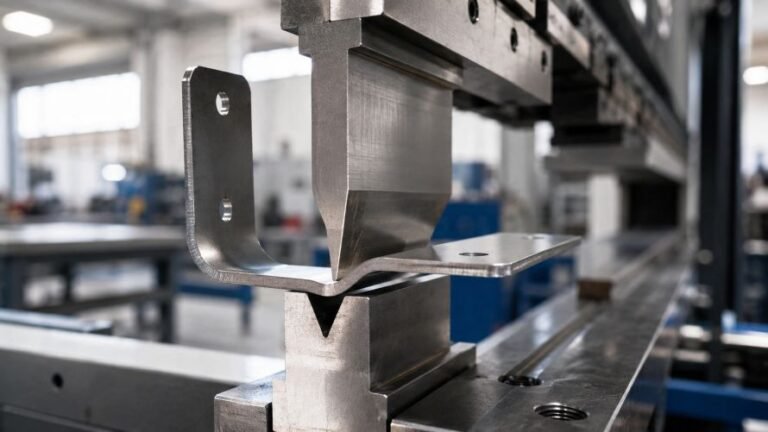
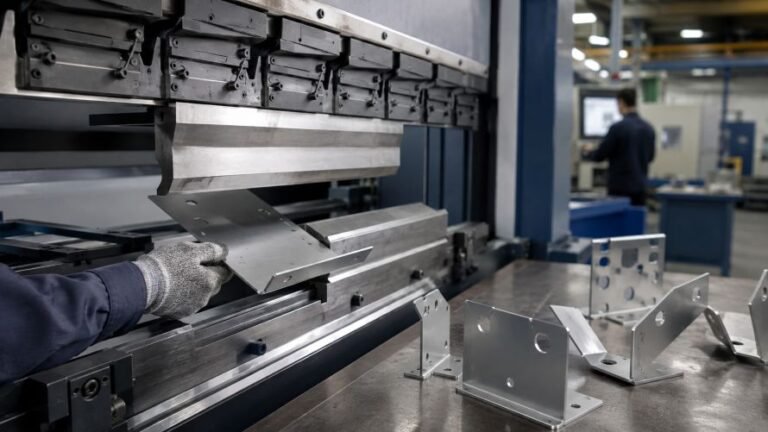
Stainless steel stamping is a manufacturing process that uses a press and a dedicated die to cut, pierce, form, bend, or draw stainless steel sheet or strip into a required part shape. Depending on the geometry and volume, production may use a simple single-operation die, a transfer process, or progressive tooling that performs several operations as the material advances through the die.
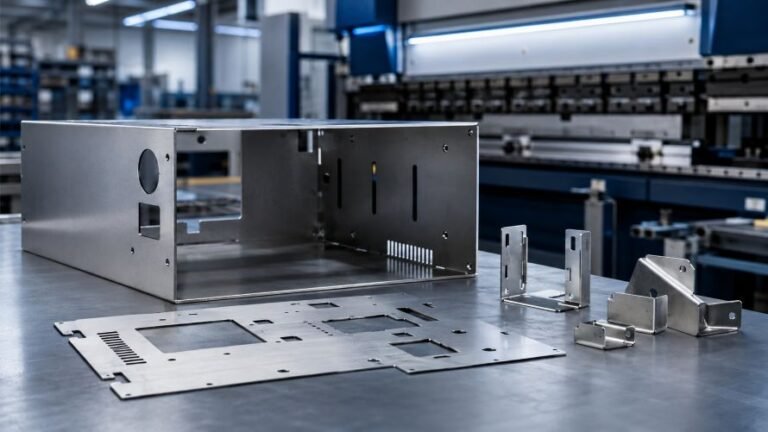
Like other forms of precision metal stamping, the process is especially suitable for repeat parts that need consistent geometry and efficient production. The final part may remain flat or include formed features such as flanges, tabs, holes, slots, louvers, or shallow drawn shapes.
For a broader introduction to the process, see What Is Precision Metal Stamping and How Does It Work?. If your part requires multiple operations in a continuous strip, Progressive Die Stamping provides useful context.
Why Choose Stainless Steel for Stamped Parts?
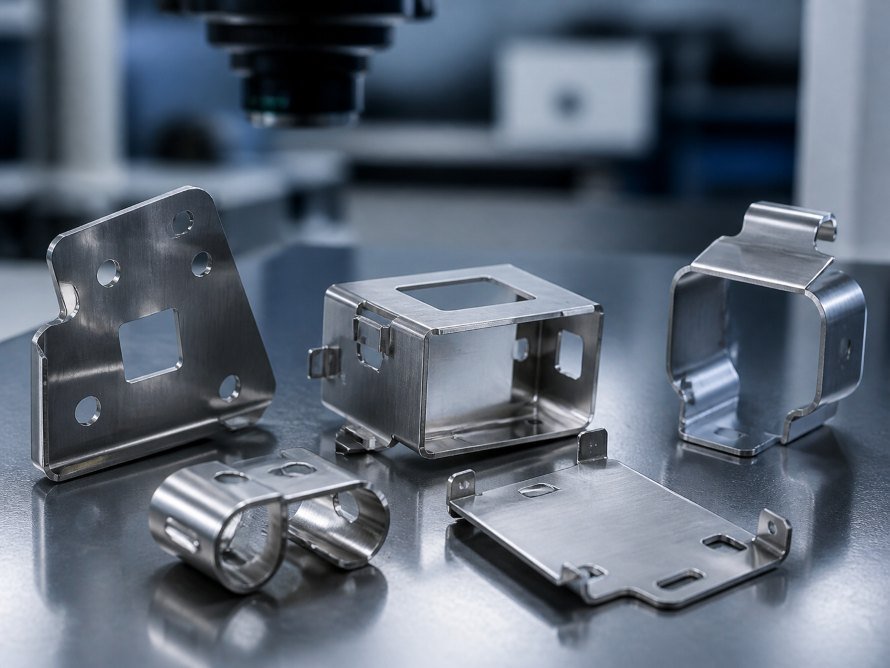
The main reason to choose stainless steel is usually its performance in the intended service environment. It can provide a useful combination of corrosion resistance, strength, hygiene, heat resistance, and appearance—but each benefit must be weighed against forming difficulty and material cost.
| Benefit | Why it matters for stamped parts | Typical buyer consideration |
|---|---|---|
| Corrosion resistance | Helps parts withstand moisture, humidity, or certain demanding environments | Define the real operating environment before selecting material |
| Strength and durability | Supports thin, formed structural features in many assemblies | Review load paths, bends, holes, and fastening points |
| Clean appearance | Suitable where the metal surface is visible or requires a professional finish | Specify acceptable marks, grain direction, and finish expectations |
| Temperature performance | Can be appropriate for parts exposed to elevated operating temperatures | Confirm the actual temperature range and functional requirement |
| Recyclability | Supports material recovery and sustainability objectives | Consider scrap utilization during part and strip layout planning |
Stainless steel is frequently selected when carbon steel would require additional surface protection, or when a finished part must retain a clean metallic appearance. The correct specification still depends on the application. Material choice should be based on the corrosion risk, strength requirement, forming complexity, assembly method, and relevant customer standards—not on a generic assumption that one stainless steel type fits every project.
Key Challenges in Stainless Steel Stamping
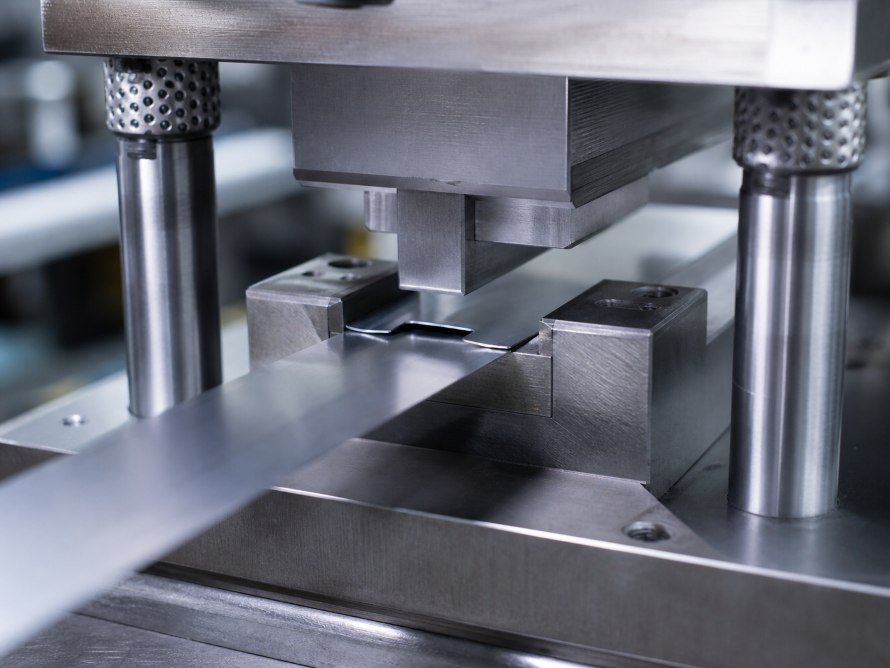
Stainless steel can be stamped successfully, but it often requires more attention during tooling and process planning than softer materials. Its strength and work-hardening behavior can increase forming load, accelerate wear in tooling, and make springback more noticeable after bending or forming.
| Challenge | Potential effect | Practical planning response |
| Higher forming force | Increased load during cutting and forming | Match press capacity and tooling design to the part and material |
| Tool wear | Edge condition and repeatability can change over time | Plan suitable tool materials, maintenance, and inspection |
| Springback | Formed angles may relax after release from the die | Build compensation into the forming method where needed |
| Surface scratching | Visible marks can affect cosmetic parts | Define handling, lubrication, tooling condition, and packaging needs |
| Burr control | Sharp or inconsistent edges may affect assembly and safety | Specify deburring or edge-condition expectations early |
These are not reasons to avoid stainless steel. They are reasons to involve manufacturing feedback early. A part that looks simple in CAD may need a different bend sequence, relief feature, radius, or strip layout to make production more stable and cost-effective.
Design Considerations Before You Request a Quote
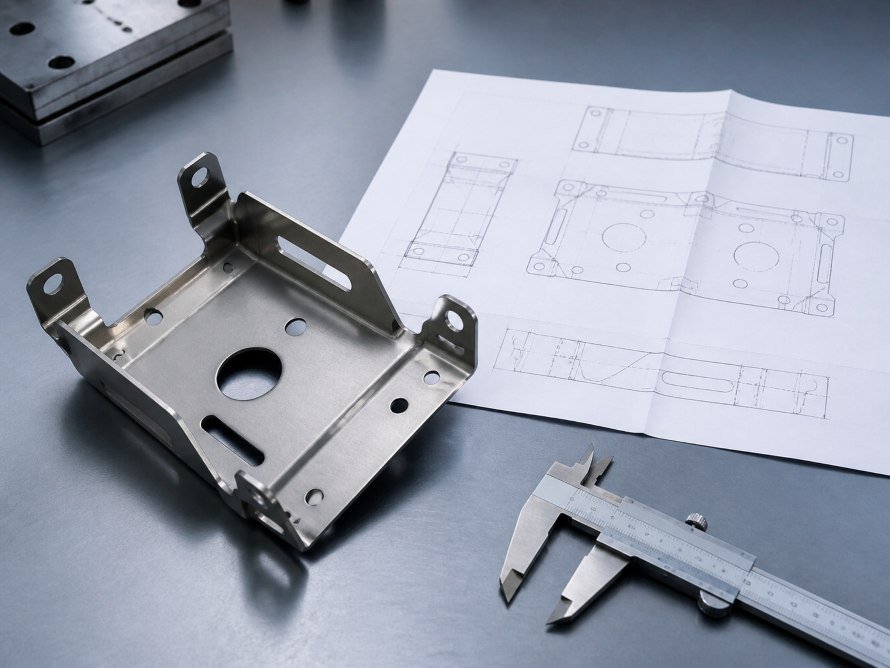
A clear RFQ helps a manufacturer evaluate both feasibility and total production requirements. In addition to part geometry, include the information that affects material selection, tooling, quality control, and packaging.
| Information to provide | Why it is important |
| 2D drawing and 3D model, if available | Defines geometry, dimensions, formed features, and critical areas |
| Material specification | Avoids ambiguity about stainless steel type, thickness, temper, or finish |
| Expected annual or batch quantity | Helps determine whether dedicated tooling is appropriate |
| Critical dimensions and functional features | Focuses inspection planning on what matters in assembly |
| Cosmetic or surface requirements | Clarifies acceptable scratches, marks, burrs, and finish direction |
| Assembly details | Identifies welding, fastening, insert, coating, or secondary-process needs |
| Packaging requirement | Helps protect finished surfaces and formed features during shipment |
Avoid specifying unnecessarily tight requirements across the entire drawing. It is usually more useful to identify the dimensions and surfaces that affect function, fit, sealing, appearance, or downstream assembly. This gives the manufacturing team a clearer basis for process planning.
For additional guidance on material selection in stamping projects, see What Materials Are Commonly Used for Metal Stamping?.
Common Applications of Stainless Steel Stamping
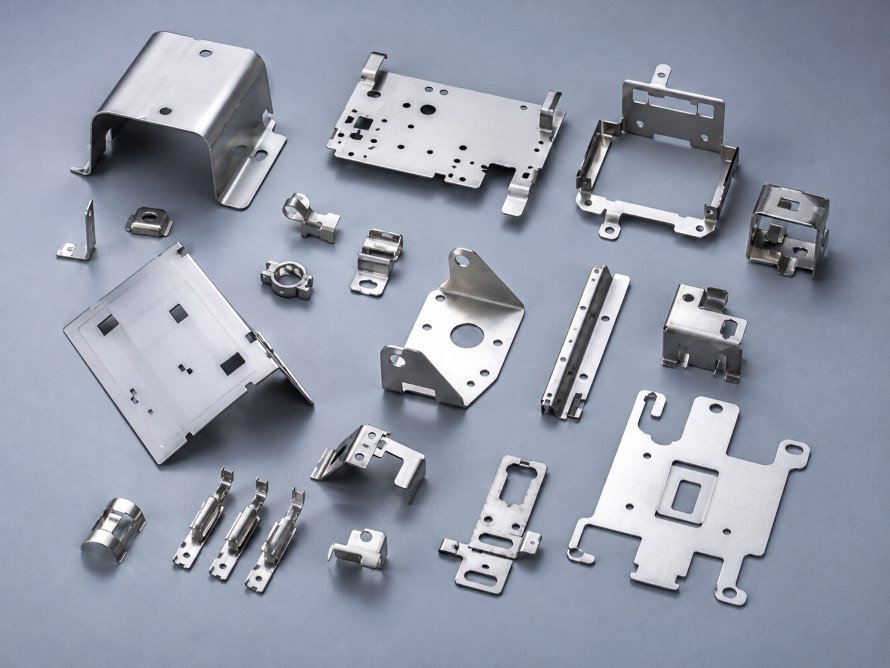
Stainless steel stamped parts appear in many product categories because the material can serve structural, protective, conductive-support, and cosmetic roles.
| Application area | Examples of stamped parts |
| Electronics and electrical equipment | Shields, clips, mounting brackets, connector-related hardware |
| Lighting products | Mounting components, reflectors, housings, support brackets |
| Industrial equipment | Covers, guards, clips, formed supports, fastening parts |
| Automotive-related assemblies | Brackets, clips, shields, retention components |
| Appliances and consumer products | Panels, internal supports, handles, trim, functional fittings |
| Furniture, locks, and hardware | Reinforcement parts, brackets, catches, decorative fittings |
The exact material and process should always be selected for the part’s operating conditions. For example, a visible housing, a concealed mounting bracket, and a component used near moisture may each require a different balance of surface condition, corrosion resistance, thickness, and cost.
How Stainless Steel Stamping Affects Project Cost
Material price is only one part of the cost picture. The total cost of a stainless steel stamped part may also be influenced by geometry, material utilization, tooling complexity, secondary operations, inspection needs, and order volume.
A simple flat part with efficient nesting may be very different from a deep-formed or cosmetically sensitive component with multiple bends and protective packaging requirements. Early DFM review can identify opportunities to simplify geometry, improve strip utilization, reduce secondary work, or make critical requirements more focused.
For recurring OEM/ODM projects, it is often helpful to evaluate cost at the system level rather than only the unit-price level. A material that costs more initially may reduce the need for added surface treatment or help improve product durability in the intended environment. The right decision depends on the product requirement, not on material cost alone.
Choosing a Manufacturing Partner for Stainless Steel Stamping
A capable partner should be able to review the drawing, understand the end-use requirement, identify production risks, and communicate the information needed before tooling and production decisions are finalized. Choosing a manufacturing partner for stainless steel stamping.
Dongguan Xiyu Hardware & Electronic Co., Ltd. supports OEM/ODM manufacturing projects involving stamping die design and manufacturing, precision stamping, CNC machining, turning, sheet metal fabrication, and custom precision hardware production. For a stainless steel stamping RFQ, sharing your drawing, material requirement, quantity estimate, key dimensions, surface expectations, and assembly details will support a more useful technical review.
FAQ
Is stainless steel good for metal stamping?
Yes. Stainless steel is commonly used for stamped parts when corrosion resistance, durability, appearance, or temperature performance are important. The material, part geometry, thickness, surface requirement, and production volume should be reviewed together.
Does stainless steel stamping require special tooling?
Tooling requirements depend on the material and part design. Because stainless steel can be more demanding to cut and form than softer metals, die design, tool condition, lubrication, and maintenance planning are important to stable production.
Can stainless steel stamped parts have a clean cosmetic finish?
They can, but cosmetic requirements should be stated clearly in the RFQ. Define which surfaces are visible, what type of marks are acceptable, whether grain direction matters, and how parts should be protected during handling and shipment.
What should I send for a stainless steel stamping quote?
Provide a drawing, material specification, expected quantity, critical dimensions, surface requirements, assembly details, and any packaging or inspection expectations. The more clearly the functional requirements are defined, the more effectively the project can be evaluated.
Request a Stainless Steel Stamping Quote
Need custom stainless steel stamped parts for an OEM or production project? Send your drawing, material requirement, estimated quantity, and key performance expectations. Our team can review the part with you and discuss the most suitable manufacturing approach for your project.