Welcome to XiYu

What Is Precision Metal Stamping and How Does It Work?
Learn how precision metal stamping transforms sheet metal into accurate custom components, including the process, materials, tooling, costs, applications, and sourcing considerations.

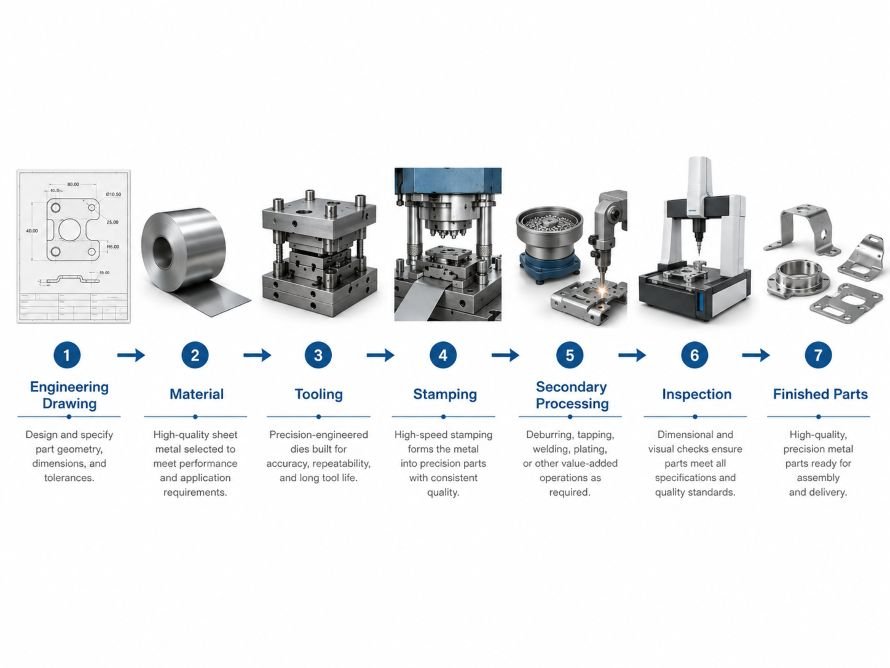
Precision metal stamping is a manufacturing process used to produce accurate and repeatable components from sheet metal, strip, or coil. With a combination of stamping presses and specially designed mold, manufacturers can cut, bend, pierce, form, draw, and shape metal into components that meet specific dimensional and functional requirements.
The process is widely used for electronics, lighting products, automotive components, machinery, smart home devices, furniture hardware, and many other industrial and consumer applications.
For OEM and ODM projects, precision metal stamping becomes particularly attractive when a product requires consistent dimensions, repeatable quality, efficient production, and the ability to scale from initial production to larger order volumes.
But how does the metal stamping process actually work? What materials can be used? And when should a buyer consider stamping instead of CNC machining or other manufacturing processes?
This guide explains the fundamentals.
What Is Precision Metal Stamping?
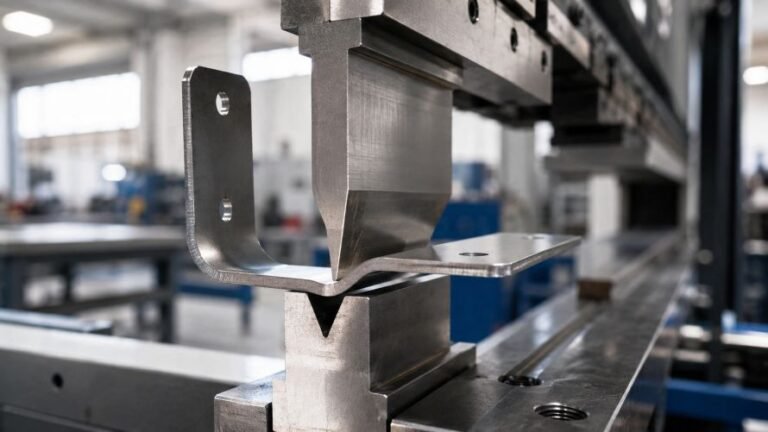
Precision metal stamping transforms flat metal material into a finished or semi-finished component using a stamping press and dedicated tooling.
The starting material is commonly supplied as:
- Sheet metal
- Metal strip
- Metal coil
During production, the material is positioned inside a mold. The stamping press then applies controlled force to cut or form the material according to the required geometry.
Common stamping operations include the following:
| Stamping Operation | Main Purpose | Typical Features |
|---|---|---|
| Blanking | Cuts the basic component shape from sheet metal | Plates, flat profiles and blanks |
| Punching / Piercing | Creates holes, slots or openings | Mounting holes, cutouts and slots |
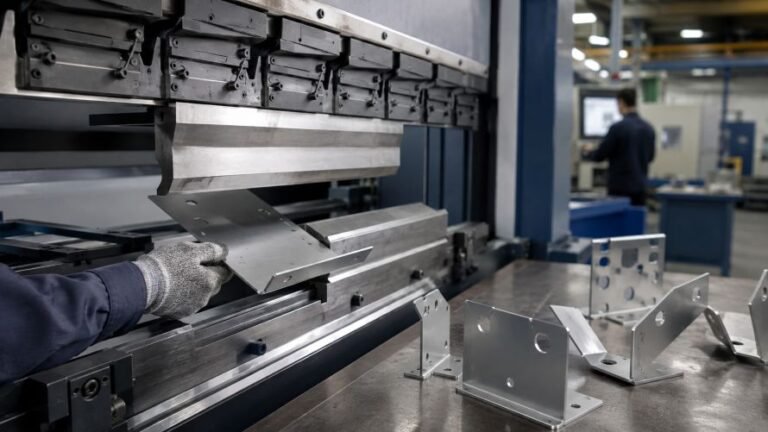
| Bending | Forms the metal to a specified angle | Brackets, flanges and tabs |
| Forming | Changes the shape without fully removing material | Ribs, channels and contours |
| Drawing | Creates deeper three-dimensional forms | Shells, cups and covers |
| Coining | Applies concentrated pressure to create detailed features | Controlled local dimensions and fine details |
A relatively simple bracket may require only a few stamping operations. A more complex precision component may pass through multiple forming stages before it reaches its final shape.
The important word in precision metal stamping is “precision.”
Producing a part is only one part of the challenge. The manufacturer must also control dimensions, tooling condition, material behavior, repeatability, surface requirements, and inspection throughout production.
For a component that must fit into an assembly or perform a mechanical or electrical function, even a small dimensional variation can affect the final product.
How Does the Precision Metal Stamping Process Work?
Although every component has different manufacturing requirements, a typical custom metal stamping project can be divided into six main stages.
1. Part Design and Drawing Review
The manufacturing process normally begins with the customer’s drawing or CAD model.
A manufacturer may review information such as:
- 2D engineering drawings
- 3D CAD files
- Material specifications
- Material thickness
- Critical dimensions
- Tolerances
- Surface treatment requirements
- Estimated order quantities
- Assembly requirements
Before tooling is manufactured, it is useful to review whether the component can be produced efficiently and consistently.
This is often referred to as a Design for Manufacturing (DFM) review.
Typical issues identified during this stage may include:
- Difficult bend geometry
- Insufficient edge distance
- Very tight tolerances
- Possible material cracking
- Burr-sensitive features
- Complex forming requirements
- Features that unnecessarily increase tooling complexity
Identifying these issues before tooling begins can reduce later modifications, shorten development cycles, and improve production stability.
2. Material Selection
Material selection has a direct influence on the performance of the component and the stamping process itself.
Common materials used for stamped metal parts include:
| Material | Key Advantages | Typical Applications |
|---|---|---|
| Stainless Steel | Strength, corrosion resistance and durability | Industrial parts, electronics and automotive components |
| Carbon / Mild Steel | Good mechanical strength and cost efficiency | Brackets, supports and structural hardware |
| Aluminum | Lightweight and corrosion resistant | Electronics, lighting and consumer products |
| Copper | Excellent electrical and thermal conductivity | Electrical contacts and conductive components |
| Brass | Good formability, conductivity and appearance | Connectors and decorative hardware |
| Phosphor Bronze | Elasticity, fatigue resistance and conductivity | Springs, clips and electrical contacts |
Different metals behave differently under stamping force.
For example, stainless steel provides good strength and corrosion resistance but may require higher forming forces than softer materials.
Aluminum is lightweight and relatively corrosion resistant, making it useful for many electronics and lighting applications.
Copper and brass may be selected when electrical conductivity is important.
Material thickness also matters. It can affect:
- Required forming force
- Mold clearance
- Bend behavior
- Springback
- Dimensional stability
- Tooling design
- Material utilization
- Final cost
For this reason, material selection should be considered together with component geometry and production requirements.
3. Stamping Mold Design and Manufacturing
The stamping mold is one of the most important elements of the entire process.
A mold is designed around the geometry of the component and the sequence of manufacturing operations required to produce it.
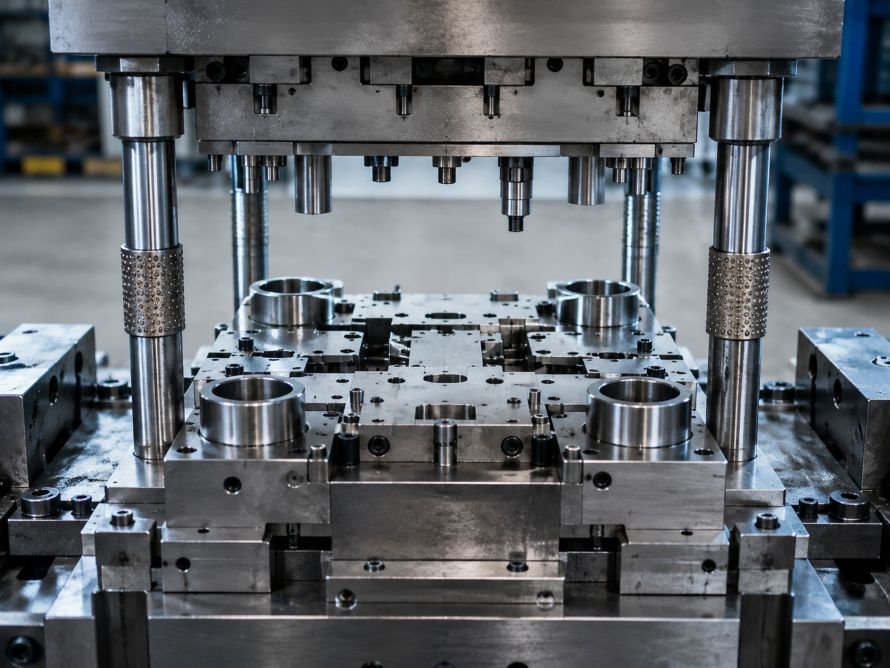
Common tooling configurations include:
- Single-operation mold
- Compound mold
- Progressive mold
- Custom multi-stage tooling
A progressive mold, for example, allows metal strip to move through several stations inside the same tooling system.
One station may punch a hole.
The next may create a bend.
Another may form a feature.
The final station may separate the finished component from the strip.
Good stamping mold design can influence:
- Dimensional consistency
- Production speed
- Tool life
- Material utilization
- Part quality
- Scrap rate
- Production stability
This is why buyers evaluating a metal stamping supplier should look beyond the stamping press itself.
Tooling design and tooling manufacturing capability are equally important.
4. Stamping Production
Once the tooling has been completed, tested, and approved, production can begin.
Sheet or coil material is fed into the stamping press.
The upper and lower sections of the mold move together under controlled press force to create the required shape or feature.
Depending on the tooling design, one press cycle may complete a single operation or several operations.
The main advantage becomes more apparent as production volume increases.
After tooling and process parameters are established, the same geometry can be produced repeatedly and efficiently.
This makes metal stamping particularly suitable for components that require:
- Repeat production
- Stable dimensions
- Consistent geometry
- Short production cycles
- Medium- or high-volume manufacturing
5. Secondary Processing
A component does not necessarily leave the stamping press as a completely finished product.
Depending on the drawing and final application, additional operations may still be required.
Typical secondary processes include:
- Deburring
- Tapping
- Welding
- CNC machining
- Cleaning
- Polishing
- Plating
- Powder coating
- Heat treatment
- Assembly
For some custom OEM projects, several manufacturing processes may be combined.
For example, the main geometry may be produced by stamping, while a particularly critical feature is finished using CNC machining.
This type of combined-process manufacturing can be useful when a component cannot be produced efficiently with only one process.
6. Inspection and Quality Control
Precision components need to be inspected against the customer’s approved drawing and specifications.
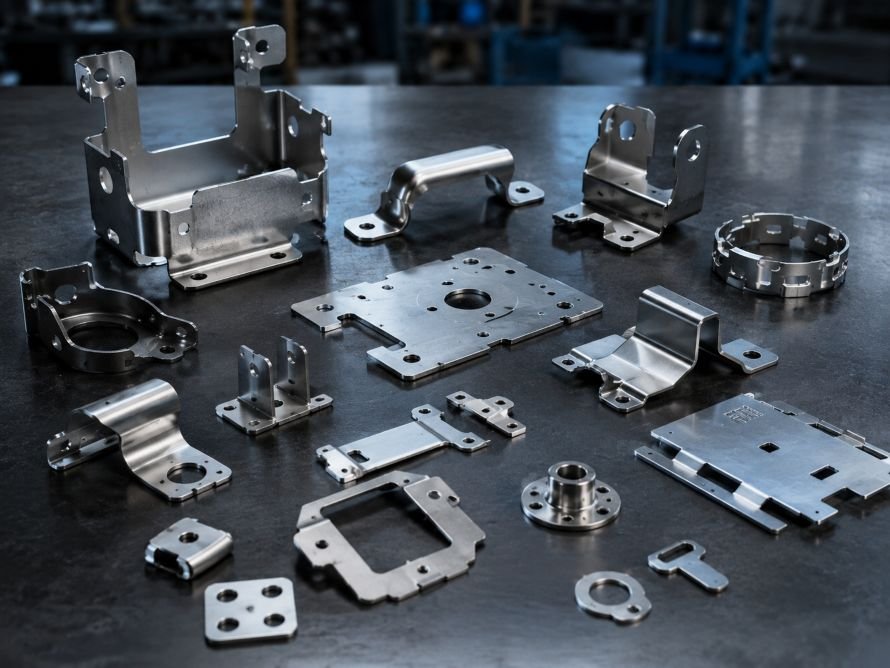
Common inspection characteristics include:
- Overall dimensions
- Hole diameter
- Hole position
- Bend angle
- Flatness
- Material thickness
- Surface appearance
- Critical tolerances
- Coating requirements
Quality control should not be limited to the final inspection.
Stable stamping production also depends on controlling the manufacturing process itself.
Important factors may include:
- Material consistency
- Tool condition
- Press parameters
- Mold condition
- Process stability
- Inspection frequency
The higher the production quantity, the more important process stability becomes.
A defect repeated across thousands of parts can be considerably more costly than identifying a process issue during an early inspection.
What Are the Main Advantages of Precision Metal Stamping?
Metal stamping offers several important advantages for OEM and custom manufacturing projects.
High Production Efficiency
Once the tooling and production parameters have been established, stamping presses can repeatedly produce components at relatively high speed.
This makes stamping particularly attractive for scalable manufacturing.
Good Repeatability
The geometry of the component is controlled by dedicated tooling.
With stable tooling, material, and production conditions, manufacturers can maintain consistent dimensions across repeat orders.
Multiple Features Can Be Integrated
Several features can often be formed during the stamping process.
Depending on the part design, these may include:
- Holes
- Slots
- Bends
- Tabs
- Ribs
- Flanges
- Formed sections
This can reduce the need to manufacture every feature in a separate production step.
Competitive Unit Cost at Higher Volumes
Stamping normally requires an initial tooling investment.
However, tooling cost can be distributed across a larger number of parts as production volume increases.
That is why stamping can become economically attractive for medium- and high-volume production.
Efficient Material Utilization
Tooling engineers can optimize strip layout and part orientation to improve material usage.
For high-volume programs, even a relatively small improvement in material utilization can have a meaningful influence on total manufacturing cost.
Precision Metal Stamping vs CNC Machining
Precision metal stamping and CNC machining are both important manufacturing processes, but they are suitable for different types of components and production requirements.
| Factor | Precision Metal Stamping | CNC Machining |
|---|---|---|
| Starting Material | Sheet metal, strip or coil | Solid block, bar or other stock |
| Main Method | Cuts and forms material using mold and press force | Removes material using cutting tools |
| Dedicated Tooling | Usually required for production | Generally uses cutting tools and fixtures |
| Prototype Quantities | Tooling may make very small quantities less economical | Often suitable for low-volume prototypes |
| Medium / High Volume | Highly efficient for suitable parts | Cost remains influenced by machining time per part |
| Typical Geometry | Sheet-metal brackets, clips, contacts and formed components | Housings, shafts and complex machined features |
| Scalability | Very strong after tooling is established | Depends on machines, cycle time and capacity |
Neither process is automatically better.
The right choice depends on:
- Part geometry
- Material
- Thickness
- Tolerance requirements
- Quantity
- Development stage
- Target unit cost
In some projects, metal stamping and CNC machining can also be used together.
For example, stamping may create the main shape efficiently, while CNC machining is used only for critical features that require additional precision or cannot be formed economically.
What Products Are Made With Precision Metal Stamping?
Precision stamped parts are found across many industries.
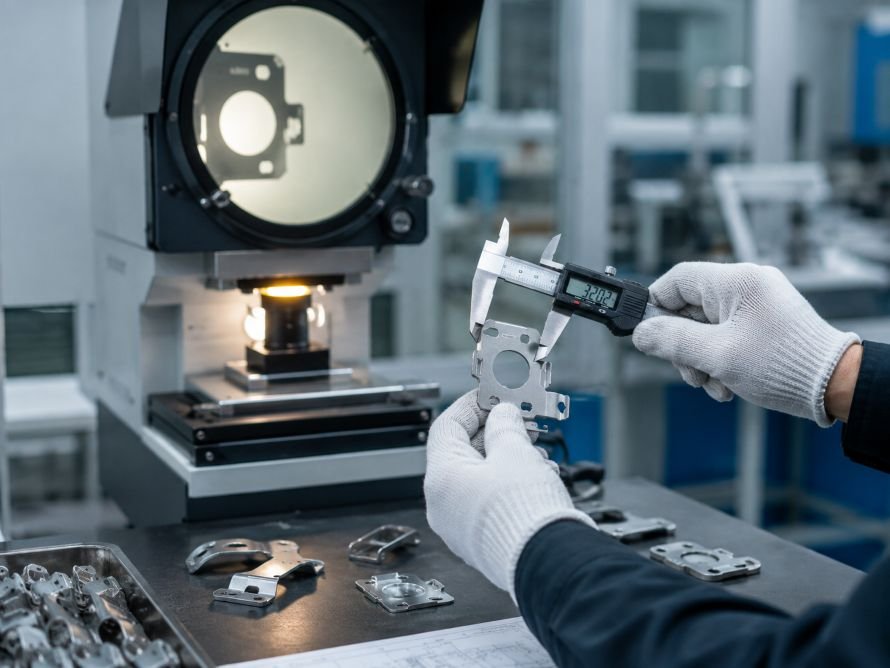
Electronics and Electrical Products
Typical stamped parts may include:
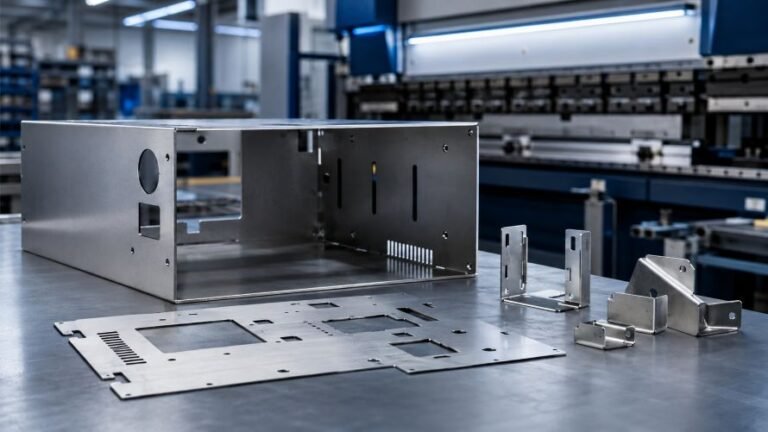
- Metal housings
- Contacts
- Clips
- Shields
- Brackets
- Mounting components
Lighting Products
Applications may include:
- Mounting hardware
- Brackets
- Structural components
- Heat-management-related metal parts
Automotive Applications
Examples can include:
- Brackets
- Clips
- Mounting plates
- Structural hardware
- Electrical metal components
Machinery and Industrial Equipment
Stamped components may include:
- Supports
- Covers
- Connectors
- Retainers
- Mechanical hardware
Smart Home and Consumer Products
Typical parts can include:
- Internal brackets
- Enclosures
- Mounting components
- Functional or decorative metal parts
The same fundamental stamping technology can therefore support many different industries.
The tooling and production process are customized around the specific component rather than around only one product category.
What Factors Affect the Cost of Precision Metal Stamping?
There is no standard price for a custom stamped metal part.
The quotation depends on the combination of material, tooling, geometry, production quantity, and secondary processing.
| Cost Factor | How It Affects the Project |
|---|---|
| Material | Grade, thickness, market price and material utilization affect part cost |
| Tooling Complexity | More operations and complex progressive tooling increase initial tooling investment |
| Part Geometry | Deep forms, tight bends and difficult features may require more complex tooling |
| Tolerances | Tighter requirements can increase tooling, inspection and process-control demands |
| Production Quantity | Higher quantities can spread tooling and setup costs across more parts |
| Secondary Operations | Machining, tapping, welding, plating, coating and assembly add processing steps |
| Inspection Requirements | Additional inspection or documentation can increase quality-control requirements |
This is why buyers should avoid evaluating a stamping quotation based only on unit price.
A low unit price may not represent the lowest overall project cost if tooling stability, scrap, secondary operations, quality control, or delivery performance are not considered.
What Information Should You Provide for a Metal Stamping RFQ?
Providing complete project information allows the manufacturer to evaluate tooling, process requirements, and pricing more accurately.
A useful RFQ normally includes:
| RFQ Information | Why It Matters |
|---|---|
| 2D Engineering Drawing | Defines dimensions, tolerances and technical specifications |
| 3D CAD File | Helps evaluate geometry and manufacturability |
| Material Specification | Determines forming characteristics and raw material requirements |
| Material Thickness | Influences tooling clearance and forming behavior |
| Surface Treatment | Defines secondary finishing requirements |
| Estimated Quantity | Helps determine the appropriate tooling and production strategy |
| Critical Tolerances | Identifies features requiring tighter manufacturing control |
| Application Information | Helps the manufacturer understand functional requirements |
| Inspection Requirements | Clarifies quality-control expectations |
| Packaging Requirements | Helps plan final delivery and part protection |
If every technical detail has not yet been finalized, providing information about the final application can still be useful.
An experienced manufacturer may be able to identify manufacturing risks or suggest more practical options before tooling begins.
How to Choose a Precision Metal Stamping Manufacturer
Unit price is important, but it should not be the only factor used to evaluate a supplier.
For OEM and ODM projects, buyers should also consider:
- Stamping mold design capability
- Tooling manufacturing experience
- Precision stamping experience
- Material knowledge
- Quality inspection capability
- Engineering support
- Secondary processing capability
- Prototype-to-production support
- Communication efficiency
- Production capacity
- OEM and ODM experience
The goal should be to find a manufacturing partner capable of understanding both the drawing and the production requirements behind it. For a more structured supplier-evaluation framework, see our guide on how to choose a precision metal stamping manufacturer in China.
A capable supplier should not only reproduce the geometry shown on the drawing.
Where appropriate, the supplier should also be able to identify potential manufacturability issues before they become expensive production problems.
Precision Metal Stamping at Xiyu Hardware
Dongguan Xiyu Hardware & Electronic Co., Ltd. has been engaged in precision hardware manufacturing since 2004.
The company’s manufacturing capabilities include:
- Metal stamping mold design and manufacturing
- Precision metal stamping
- CNC machining
- CNC turning
- Sheet metal fabrication
- Custom hardware component manufacturing
Xiyu Hardware focuses primarily on customized OEM and ODM manufacturing projects, supporting components used in electronics, lighting, machinery, automotive applications, furniture hardware, consumer products, and other industries.
Because different components require different manufacturing methods, stamping can also be combined with CNC machining, sheet metal fabrication, surface treatment, and other secondary processes when the project requires them.
For custom metal parts, early communication about drawings, material, tolerances, quantities, and application requirements helps determine a more appropriate manufacturing approach.
Frequently Asked Questions About Precision Metal Stamping
What is the difference between metal stamping and sheet metal fabrication?
Metal stamping typically uses stamping presses and dedicated mold to repeatedly cut or form metal.
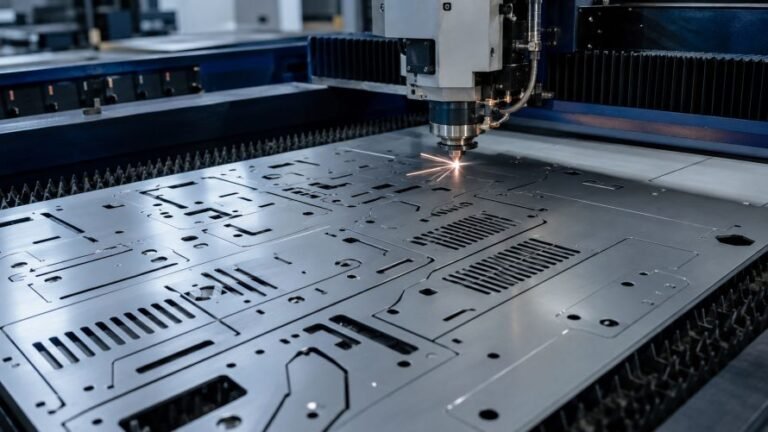
Sheet metal fabrication is a broader manufacturing category and can include processes such as laser cutting, bending, punching, welding, and assembly.
For suitable components produced repeatedly at medium or high volumes, stamping can offer significant production efficiency.
Is metal stamping suitable for prototypes?
It depends on the component and future production requirements.
For very small quantities, CNC machining, laser cutting, or simpler tooling may sometimes be more economical than investing immediately in full production tooling.
However, if the product will later move into higher-volume production, the prototype strategy should also consider the intended final stamping process.
Is precision metal stamping suitable for mass production?
Yes.
Efficient repeat production is one of the main advantages of metal stamping.
Once the tooling and manufacturing process are stable, stamping can produce large quantities of suitable components with consistent geometry and relatively short cycle times.
What metals can be stamped?
Common materials include stainless steel, carbon steel, aluminum, copper, brass, phosphor bronze, and other metal alloys.
The best material depends on requirements such as strength, weight, corrosion resistance, conductivity, appearance, formability, and cost.
Why is tooling so important in metal stamping?
The tooling determines how the sheet metal is cut and formed.
Its design directly affects dimensional accuracy, material utilization, cycle efficiency, process stability, part quality, and tool life.
For this reason, stamping tooling capability is an important consideration when evaluating a manufacturer.
Need Custom Precision Stamped Metal Parts?
If you are developing a custom stamped metal component, complete project information can help make the quotation and manufacturing evaluation more accurate.
Send us your:
- 2D engineering drawings
- 3D CAD files
- Material requirements
- Required tolerances
- Surface treatment requirements
- Estimated production quantities
Xiyu Hardware can review your project requirements and evaluate a suitable manufacturing approach for prototype development and production.
Contact us to discuss your custom precision metal stamping project.