Welcome to XiYu

Sheet Metal Laser Cutting: How Does It Work?
Learn how sheet metal laser cutting works, what affects cut quality and cost, and what OEM buyers should provide for accurate, production-ready fabricated parts.

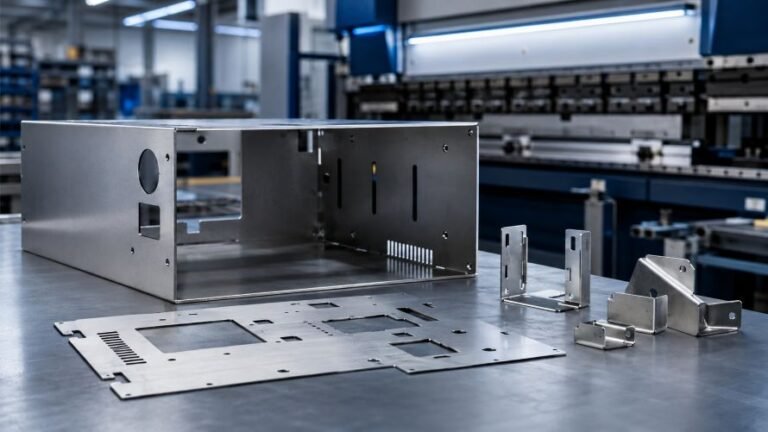
Sheet metal laser cutting is a manufacturing process that uses a focused laser beam to cut flat metal sheet into precise profiles, holes, slots, and other features. It is widely used for custom brackets, panels, enclosures, covers, chassis parts, guards, and assemblies that begin as flat material.
For OEM buyers, the value of sheet metal laser cutting is not simply that it can cut metal. The process can support flexible part geometry, drawing revisions, prototype work, and production runs without requiring a dedicated forming tool for every new flat profile. The final result still depends on the drawing, material, thickness, feature design, quality requirements, and the manufacturing steps that follow cutting.
What Is Sheet Metal Laser Cutting?
In a typical sheet metal laser cutting process, a CNC-controlled machine follows a digital program created from a part drawing or CAD file. The laser creates the required flat profile while the material remains in sheet form. After cutting, the parts may move on to bending, hardware insertion, welding, finishing, assembly, or inspection.
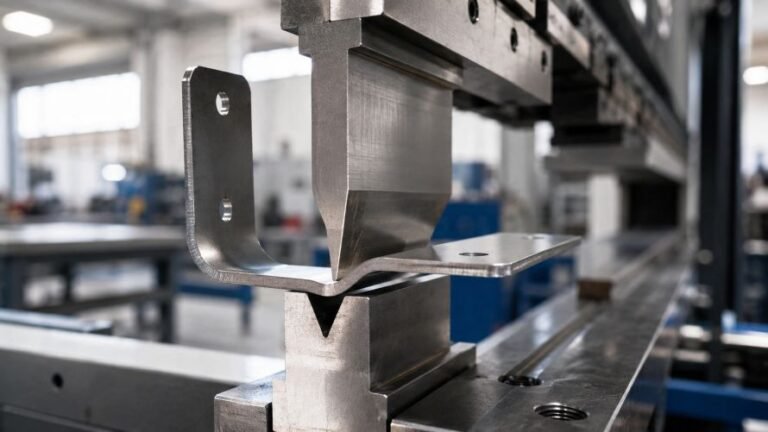
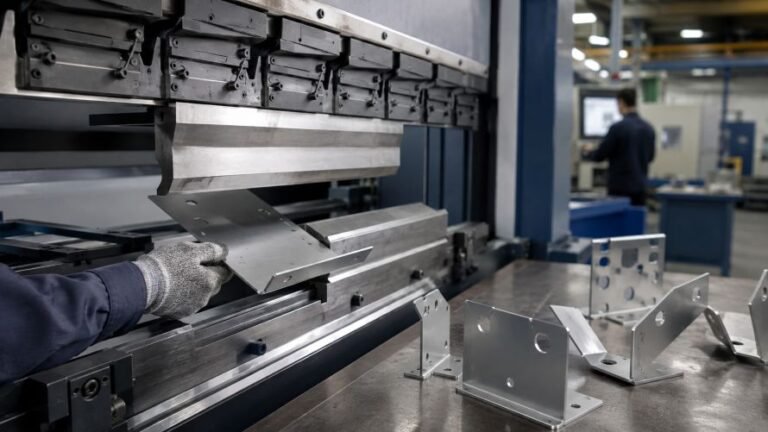
Laser cutting is one part of the wider sheet metal fabrication workflow. It is often used before press brake bending and other secondary operations transform a flat blank into a finished custom metal component.
How Does the Sheet Metal Laser Cutting Process Work?
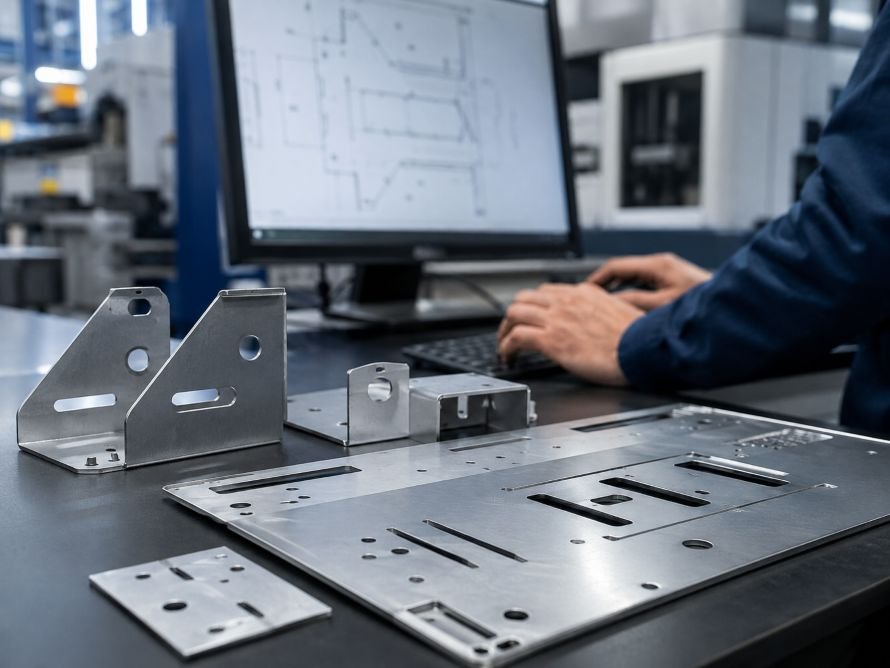
The process normally begins with a drawing review rather than with the machine itself. A manufacturer needs to understand the material, thickness, finished-part requirements, critical dimensions, quantity, and any downstream operations before selecting an appropriate manufacturing route.
| Step | What Happens | Why It Matters |
|---|---|---|
| Drawing review | The part drawing or CAD model is checked for geometry, dimensions, holes, slots, and downstream requirements. | Identifies manufacturability issues before material is processed. |
| Material selection | The selected sheet material and thickness are confirmed. | Material properties affect cut behavior, edge condition, forming, finishing, and cost. |
| Nesting | Multiple flat patterns are arranged on a sheet. | Helps use material efficiently and supports production planning. |
| Programming | The CNC cutting path, start points, lead-ins, and sequence are prepared. | A well-planned program helps control consistency and cut efficiency. |
| Laser cutting | The machine cuts outside profiles and internal features. | Creates the flat blanks, holes, slots, and cutouts required by the drawing. |
| Part handling | Cut parts are removed, sorted, and checked. | Prevents mix-ups and prepares parts for the next manufacturing stage. |
| Secondary operations | Parts may be bent, joined, finished, assembled, or inspected. | Converts flat blanks into functional finished components. |
The order of operations can change according to the design. For example, some holes or formed features may require special consideration if the part will later be bent. Reviewing the entire manufacturing route early helps avoid a flat pattern that looks correct on screen but creates unnecessary difficulty during production.
What Affects Laser-Cut Part Quality?
A laser-cut profile is influenced by more than the machine program. Buyers should consider the full combination of material, design, quality expectations, and downstream operations.
| Factor | What It Can Affect | Buyer Consideration |
|---|---|---|
| Material type and condition | Edge appearance, heat response, corrosion behavior, and finishing options | State the intended material clearly on the drawing or RFQ. |
| Sheet thickness | Cutting time, feature practicality, edge condition, and forming requirements | Confirm thickness together with the part’s strength and application needs. |
| Feature geometry | Small holes, narrow slots, sharp corners, and fine details | Identify dimensions that are critical to fit or function. |
| Cut sequence | Heat distribution and handling efficiency | Discuss sensitive areas when flatness or visual appearance is important. |
| Edge requirements | Whether a cut edge needs deburring, finishing, or further processing | Specify cosmetic, assembly, and safety requirements. |
| Downstream operations | Bending, welding, hardware insertion, coating, or assembly | Provide the complete part requirement, not only the flat profile. |
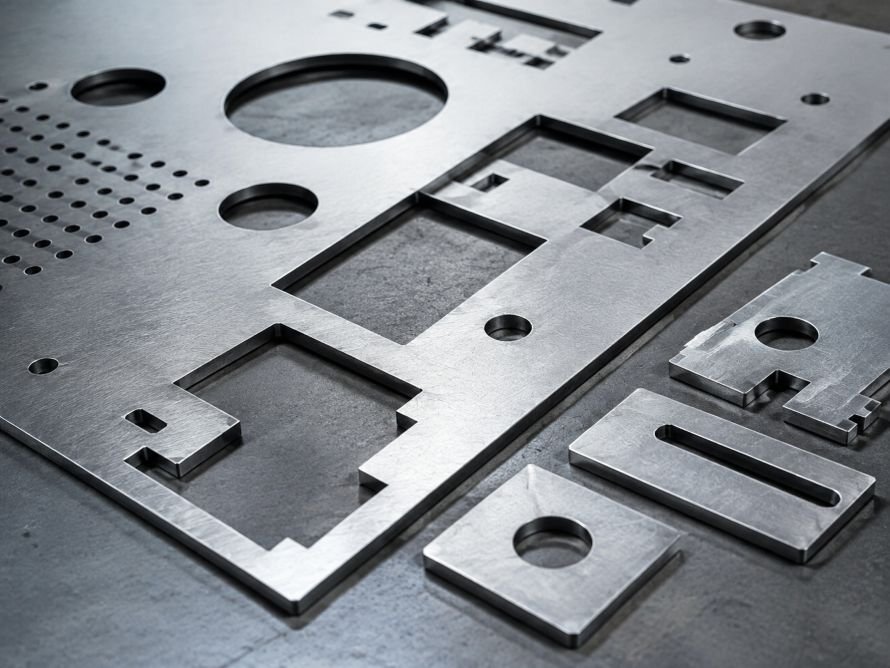
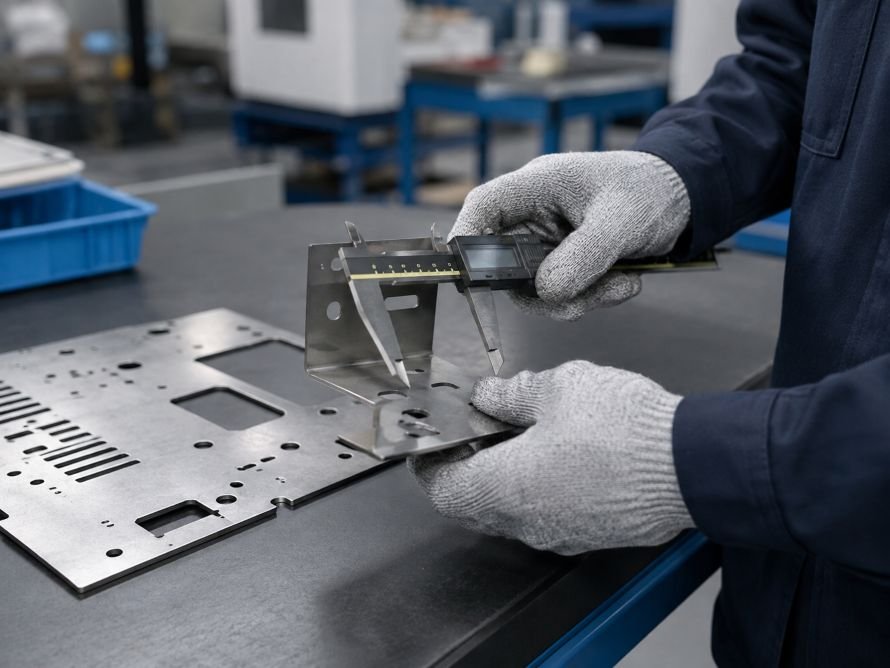
It is useful to distinguish between dimensions that are important for fit, function, assembly, and appearance. A clear drawing lets the manufacturing team focus attention on the areas that matter most instead of applying the same level of control to every feature.
Common Applications for Laser-Cut Sheet Metal Parts
Sheet metal laser cutting can be used across many OEM and industrial applications, including:
- Electrical and electronics enclosures
- Machine covers and protective guards
- Mounting brackets and support hardware
- Lighting housings and frames
- Control panels and chassis components
- Custom covers, cabinets, and access panels
- Automotive and industrial equipment parts
- Prototype assemblies and low-to-medium-volume custom parts
The process is especially useful when a part needs a combination of functional cutouts, mounting holes, ventilation features, bends, and an assembly-ready structure.
Laser Cutting Compared With Other Metalworking Methods
Laser cutting is not automatically the best choice for every part. The right process depends on the geometry, material, expected volume, tolerance requirements, and total manufacturing plan.
| Process | Often Suitable For | Main Consideration |
|---|---|---|
| Laser cutting | Flexible profiles, holes, slots, prototypes, and custom sheet metal parts | Works well when geometry may change or a part requires multiple cut features. |
| Punching | Repetitive hole patterns and features suited to punch tooling | Can be efficient when part geometry and volume support the selected approach. |
| Shearing | Straight cuts and simple rectangular blanks | Usually limited when the part requires detailed internal features or complex profiles. |
| Precision metal stamping | Stable, high-volume parts where dedicated tooling is appropriate | Precision metal stamping may be a better route when the design and volume justify tooling investment. |
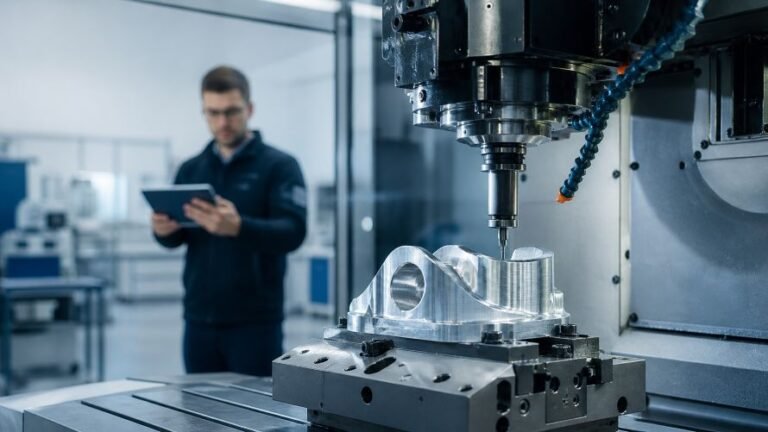
| CNC milling | Features that are better machined from solid material | CNC milling can be appropriate when a part needs machined pockets, deep features, or geometry not suited to sheet material. |
In many projects, laser cutting is only the first operation. The cut blank may still require bending, joining, surface finishing, inspection, and packaging before it becomes a usable OEM component.
When Is Sheet Metal Laser Cutting a Good Fit?
Laser cutting is commonly considered when buyers need flexibility in the flat profile and want to avoid committing immediately to dedicated tooling. It can be useful for prototypes, product development, engineering revisions, custom assemblies, and production parts with varied cut features.
It may be a practical option when the project includes:
- Multiple holes, slots, cutouts, or ventilation patterns
- Changes to the drawing during development
- A need to combine cutting with bending and assembly
- Custom brackets, panels, enclosures, or formed metal components
- Production requirements that should be reviewed alongside tooling cost and total part cost
The best route should be selected after reviewing the full part requirement. A low component price alone does not show the total manufacturing impact if the part also needs forming, hardware, finishing, inspection, or special packaging.
What Should Buyers Include in a Laser Cutting RFQ?
A complete RFQ helps a supplier evaluate the part more accurately and identify issues before production begins.
| RFQ Item | Why It Is Needed | Example |
|---|---|---|
| Drawing or CAD file | Defines the flat pattern and critical geometry | 2D drawing, 3D model, or approved revision file |
| Material and thickness | Supports process planning and cost evaluation | Material type, thickness, and any specific grade requirement |
| Quantity | Helps determine the appropriate manufacturing route | Prototype quantity, trial order, and estimated annual demand |
| Critical dimensions | Directs attention to fit and functional requirements | Hole locations, mating features, or assembly interfaces |
| Surface requirement | Clarifies cosmetic and corrosion-performance needs | Deburring, coating, plating, brushing, or other finish requirement |
| Assembly requirement | Shows what happens after cutting | Bending, welding, inserts, fasteners, labeling, or packaging |
If the part will connect with other components, include the relevant assembly information. This gives the manufacturing team a better basis for evaluating tolerances, bend locations, mounting features, and inspection priorities.
FAQ
Can laser cutting replace metal stamping?
Sometimes, but not always. Laser cutting can be a flexible choice for custom profiles, drawing revisions, and projects that do not yet justify dedicated tooling. Metal stamping can be more suitable when the design is stable and production requirements support a tooling-based process.
Does laser cutting affect the edge of a sheet metal part?
The edge condition depends on the material, thickness, feature design, cutting setup, and required finish. If edge appearance, deburring, coating, or assembly safety is important, include those requirements in the RFQ.
Can laser-cut parts be bent after cutting?
Yes, many fabricated parts are cut flat and then formed. The flat pattern, bend locations, hole placement, and material thickness should be reviewed together so that cut features work correctly after bending.
Request a Quote for Laser-Cut Sheet Metal Parts
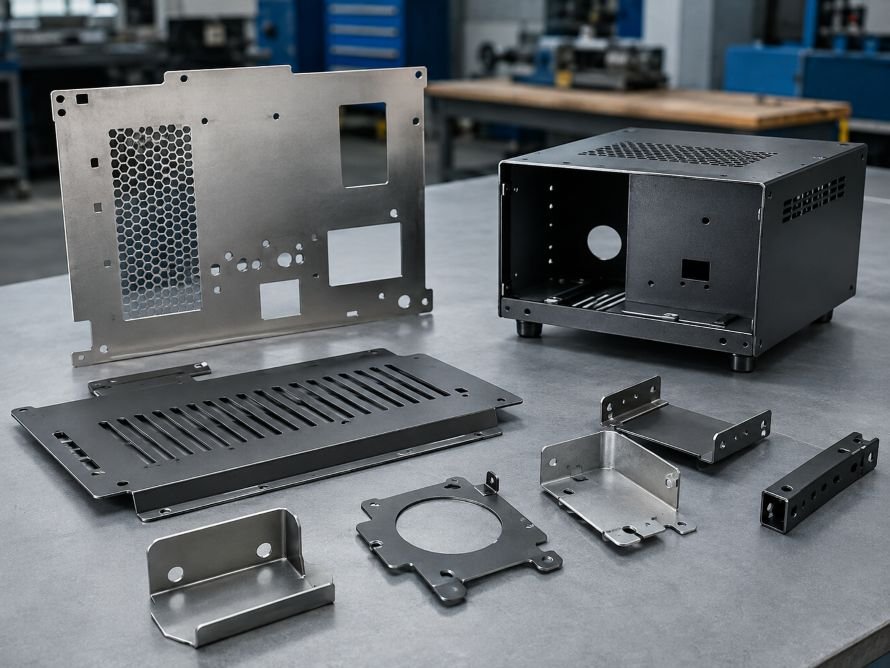
If you are sourcing custom laser-cut brackets, panels, enclosures, or formed sheet metal assemblies, send your drawing, material preference, quantity, and application requirements. Contact us to discuss a practical manufacturing route for your OEM or ODM project.