Welcome to XiYu

What Is CNC Milling and How Does It Work?
Learn how CNC milling works, the types of parts it can produce, and what information to prepare before requesting a manufacturing quote.

CNC milling is a subtractive manufacturing process that uses computer-controlled rotary cutting tools to remove material from a workpiece. It is widely used for parts that need flat faces, pockets, slots, holes, contours, and other detailed features.
For buyers and engineers, CNC milling is often a practical choice when a part design requires more geometric flexibility than a formed component can provide. The process can support prototypes, low-volume production, and repeat orders when the drawing, material, critical dimensions, and quality requirements are clearly defined.
How CNC Milling Works
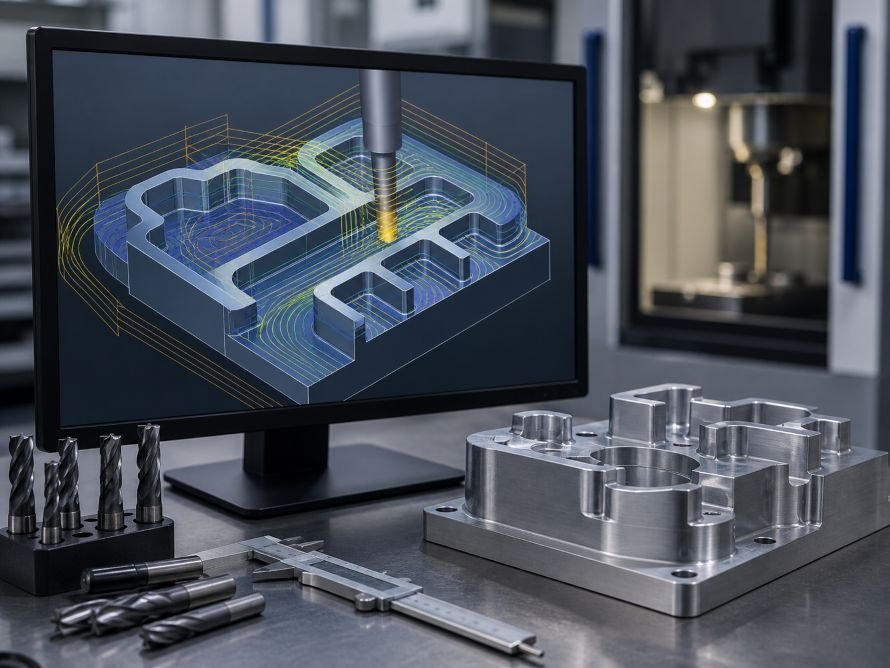
A CNC milling machine follows programmed instructions to move a cutting tool and shape a secured workpiece. In a typical setup, the cutting tool rotates while the workpiece is clamped in place. The machine removes material in controlled passes until the required geometry is produced.
The workflow usually includes these stages:
- Part design and review
The process begins with a 2D drawing or 3D CAD model. Dimensions, hole locations, threads, surface requirements, tolerances, and critical functional features should be identified before machining begins. - CAM programming
The CAD model is converted into machining instructions. The programmer selects tools, defines toolpaths, and plans the cutting sequence for roughing, finishing, drilling, or other operations. - Machine setup
The workpiece is positioned and secured using a vise, fixture, clamps, or other workholding method. Tools are loaded, reference points are set, and the machining program is checked before cutting. - Material removal
The milling cutter moves along programmed axes to remove material. Multiple passes may be used to create pockets, slots, profiles, holes, or precision surfaces. - Inspection and finishing
After machining, the part may require deburring, cleaning, surface treatment, assembly, or dimensional inspection, depending on the drawing and project requirements.
What Can CNC Milling Produce?
CNC milling is suited to a broad range of prismatic or feature-rich parts. Typical features include:
- Flat surfaces and stepped profiles
- Pockets, cavities, and recesses
- Slots, keyways, and channels
- Drilled, tapped, or reamed holes
- Contoured surfaces and angled faces
- Fixture components, brackets, housings, plates, and custom mechanical parts
A part does not need to be highly complex to benefit from CNC milling. The process can also be appropriate when a simple part needs accurate feature locations, repeatable machining, or design changes during product development.
Common CNC Milling Materials
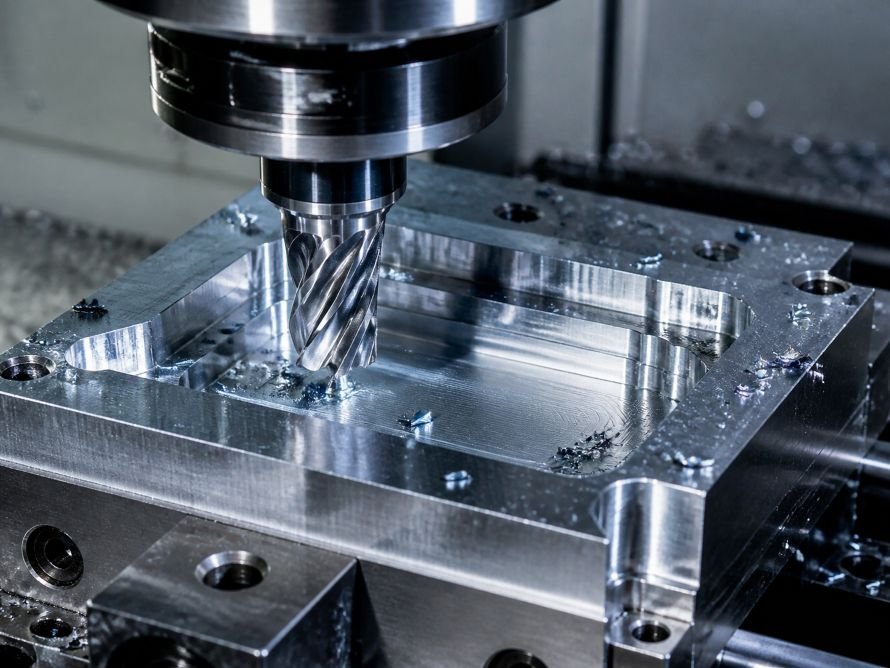
Material selection affects machining time, tool choice, surface finish, and cost. CNC milling may be used with many engineering materials, including:
- Aluminum alloys
- Stainless steel
- Carbon steel and alloy steel
- Brass and copper alloys
- Engineering plastics
- Selected composite materials
The best material is not determined by machinability alone. Engineers should also consider the part’s function, corrosion environment, strength requirements, electrical or thermal needs, weight target, finishing process, and expected production volume.
Why Workholding and Toolpaths Matter
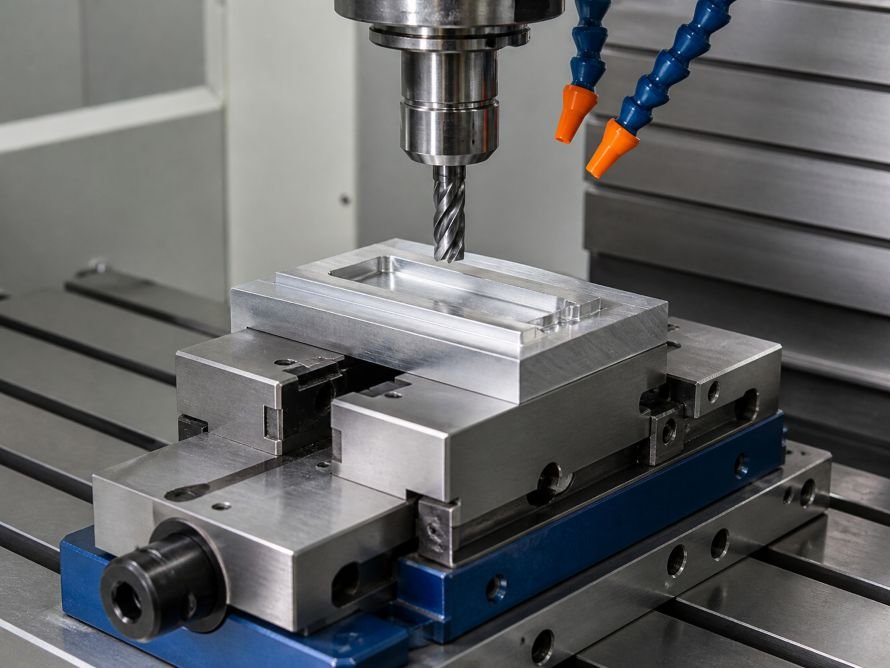
Good machining results depend on more than the machine itself. Workholding must keep the part stable throughout cutting, while the toolpath must balance access, rigidity, surface requirements, and efficient material removal.
For example, a deep pocket with thin walls may need a different machining sequence from a rigid flat plate. A feature that is difficult to access may require a different setup, a longer tool, or a design revision. Discussing these points early can help avoid unnecessary complexity later in the project.
This is why a drawing review is valuable before production. It gives the manufacturing team an opportunity to identify features that may affect setup, tool access, inspection, or cost.
CNC Milling vs. Metal Stamping
CNC milling and metal stamping can both be used to produce metal components, but they are suited to different manufacturing situations.
CNC milling is generally useful when a part needs detailed machined features, flexible design changes, or lower-volume production. Metal stamping is often more suitable for repeat production of formed sheet-metal parts once the tooling investment is justified.
If you are evaluating a part that may be made by either process, it is useful to review the geometry, material thickness, annual volume, required features, and tooling budget. Our guide to precision metal stamping explains how stamping works and where it may be a better fit.
Information to Prepare for a CNC Milling Quote
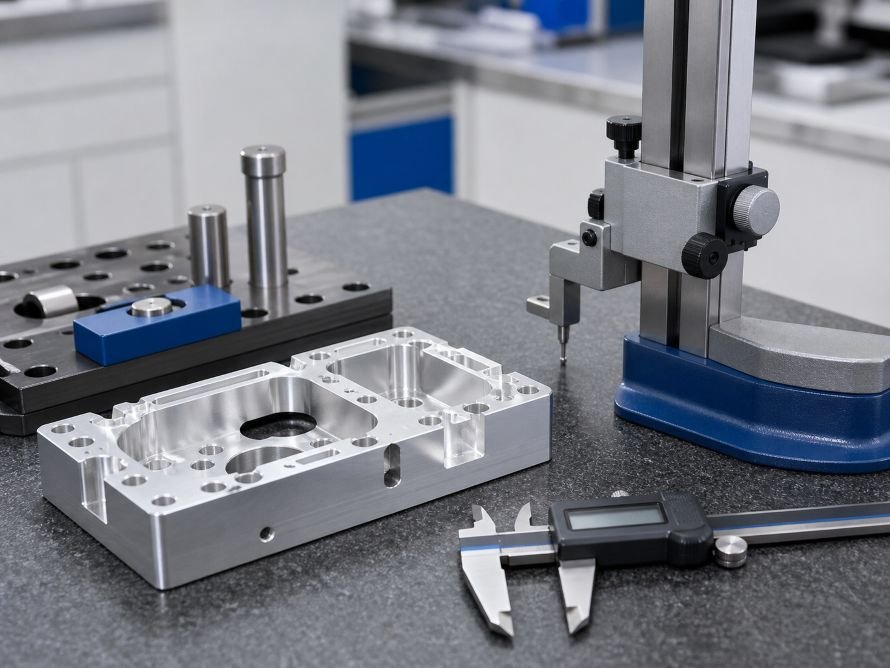
A clear RFQ helps a supplier evaluate the project more efficiently. When possible, provide:
- 2D drawings and 3D CAD files
- Material specification or preferred material
- Required quantity and expected repeat volume
- Critical dimensions and tolerances
- Thread, hole, and surface-finish requirements
- Any assembly, inspection, packaging, or delivery considerations
Not every detail needs to be finalized before an initial discussion. However, identifying the features that are most important to function will help the manufacturing review focus on the right priorities.
For a broader sourcing framework that connects process selection, material choice, tolerances, cost planning, prototypes, quality checks, and supplier evaluation, see our CNC machining in China buyer’s guide.
How Xiyu Supports Custom Hardware Projects
Dongguan Xiyu Hardware & Electronic Co., Ltd. provides custom manufacturing support across precision hardware processes, including CNC machining, CNC lathe machining, sheet metal fabrication, precision stamping, and stamping mold design and manufacture.
For projects that involve more than one manufacturing process, an early technical discussion can help determine whether machining, stamping, sheet metal fabrication, or a combined approach is more appropriate. Buyers sourcing from China can also review our guide on choosing a precision metal stamping manufacturer when assessing manufacturing capability and project fit.
FAQ
What is the difference between CNC milling and CNC turning?
In CNC milling, a rotating cutting tool removes material from a secured workpiece. In CNC turning, the workpiece rotates while a cutting tool shapes it. Turning is commonly used for round or cylindrical parts, while milling is often chosen for flat, prismatic, or feature-rich components.
Is CNC milling suitable for prototypes?
Yes. CNC milling is commonly used for prototypes because it can produce parts directly from digital drawings without requiring dedicated stamping molds. It can also support design revisions before a production process is finalized.
What affects CNC milling cost?
Cost is influenced by material, part size, geometry, tolerance requirements, surface finish, setup complexity, machining time, inspection requirements, quantity, and any secondary processes.
Request a CNC Milling Review
If you have a drawing, CAD file, material requirement, or early-stage part concept, send it to our team for an initial manufacturing review. We can help assess the appropriate process and prepare for a more effective RFQ discussion.