Welcome to XiYu

Brass vs Copper for Stamped Metal Parts
Compare brass and copper for stamped metal parts, including conductivity, formability, spring performance, Mold planning and common applications.

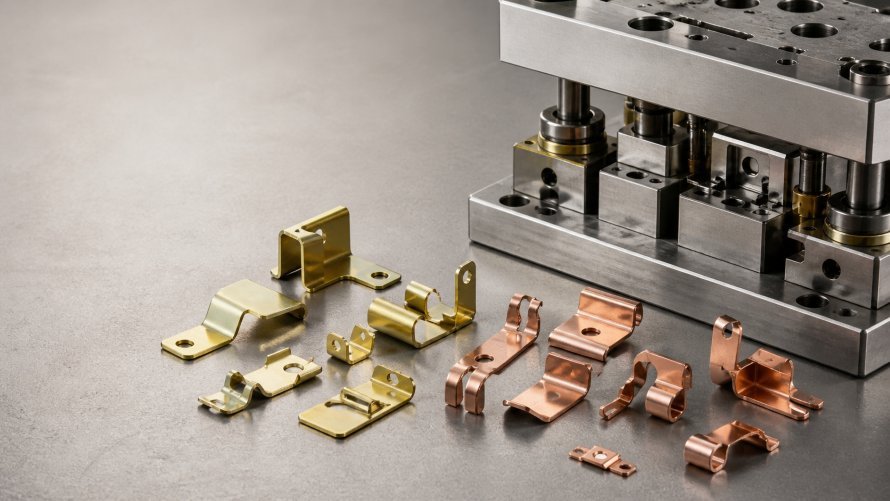
When comparing brass vs copper for stamped metal parts, engineers need to consider electrical performance, corrosion behavior, formability, strength, finishing requirements and cost. However, they are not interchangeable. The better choice depends on what the component must do after stamping: carry current, maintain spring force, resist a particular environment, accept plating, or fit within a defined cost target.
When evaluating brass stamping vs copper stamping, engineers should review the complete requirement rather than selecting material by color or initial material cost alone. Alloy grade, temper, thickness, part geometry, Mold design, finishing and end-use conditions all influence the final result.
For a broader overview of stamping material choices, see What Materials Are Commonly Used for Metal Stamping?.
Brass and Copper: The Basic Difference
Copper is known for high electrical and thermal conductivity. It is often considered for conductive paths, terminals and heat-transfer applications. Brass is a copper-based alloy that generally offers higher strength and a more rigid feel than pure copper, making it useful for formed contacts, clips, brackets and decorative components.
| Property | Copper | Brass | Why It Matters for Stamped Parts |
|---|---|---|---|
| Electrical conductivity | Very high | Lower than copper | Important for terminals, contacts and conductive paths |
| Formability | Often suitable for forming in the right temper | Varies by alloy and temper | Affects bends, draws and formed features |
| Strength and stiffness | Generally lower than many brass alloys | Often higher | Influences spring features and structural function |
| Appearance | Reddish metallic tone | Yellow-gold metallic tone | Relevant for visible or decorative components |
The comparison is not simply “copper for conductivity” and “brass for strength.” Many applications need a balance of electrical behavior, formability, spring characteristics, surface treatment and manufacturing cost.
When Copper Is the Better Choice
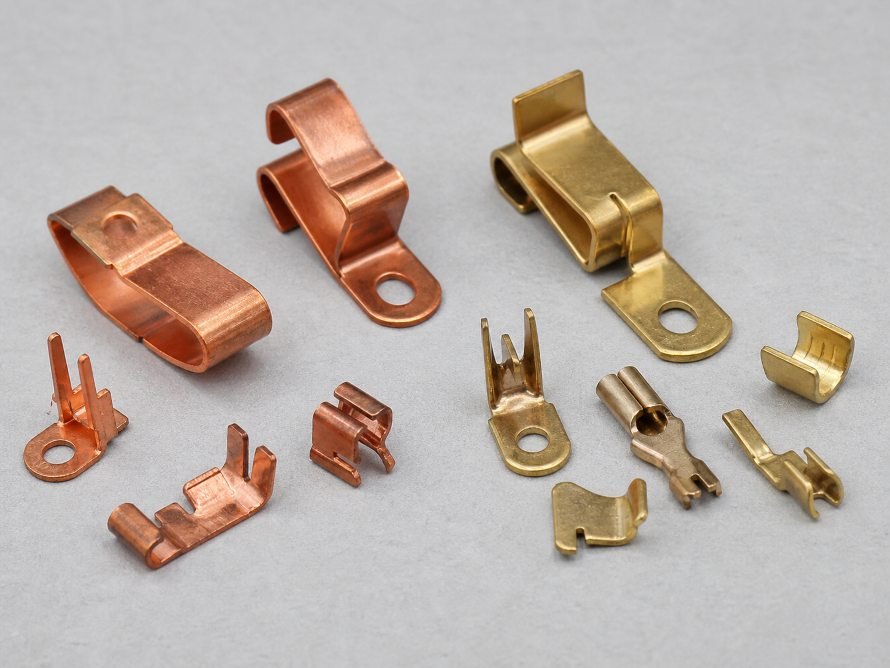
Copper is often selected when conductivity is the leading functional requirement. It can be suitable for electrical terminals, conductive clips, bus-related components, heat-transfer elements and other parts where low electrical resistance or heat movement is important.
Electrical and Thermal Performance
For components that must transfer current or manage heat efficiently, copper may offer a useful starting point. However, the full design still needs to consider contact pressure, surface oxidation, plating requirements, joining method and operating environment.
Forming and Surface Considerations
Copper can be formed into a range of stamped geometries when the selected grade and temper support the part design. For parts with critical bends or formed contact features, review bend radii, grain direction, edge condition and springback during the DFM stage.
Copper surfaces can change appearance over time in certain environments. If surface stability, solderability or contact performance is important, the finishing requirement should be defined together with the base material.
| Copper Requirement | What to Clarify Before Production | Typical Effect |
| Conductive function | Current, contact pressure and operating conditions | Guides material and finish selection |
| Formed geometry | Bend radius, feature spacing and dimensional priorities | Supports practical Mold design |
| Surface condition | Plating, oxidation control and cosmetic expectations | Helps define secondary processing |
| Assembly method | Soldering, welding, fastening or insertion | Affects material and finish compatibility |
When Brass Is the Better Choice
Brass is often chosen when a stamped component needs more stiffness, dimensional stability or spring performance than pure copper can provide. Depending on the selected brass alloy and temper, it can be suitable for clips, terminals, brackets, fittings, decorative hardware and formed mechanical components.
Strength and Spring Features
A formed contact or retention clip may need to flex repeatedly while keeping its intended shape. In those cases, brass can provide a useful balance between formability and mechanical performance. The correct alloy and temper should be selected around the actual loading requirement rather than assumed from a generic material name.
Machining and Secondary Operations
Some brass parts require secondary processes after stamping, such as tapping, joining, deburring, plating or assembly. The complete process route should be reviewed before Mold release, particularly when close fits or functional contact surfaces are involved.
| Brass Requirement | What to Clarify Before Production | Typical Effect |
| Retention or spring function | Required force, deflection and service cycles | Guides alloy, temper and geometry review |
| Formed profile | Bend sequence and critical angles | Helps manage springback and repeatability |
| Cosmetic surface | Visible finish, plating or protective treatment | Defines handling and packaging needs |
| Secondary operations | Tapping, joining, assembly or coating | Confirms process compatibility |
Brass Stamping vs Copper Stamping: A Practical Selection Guide
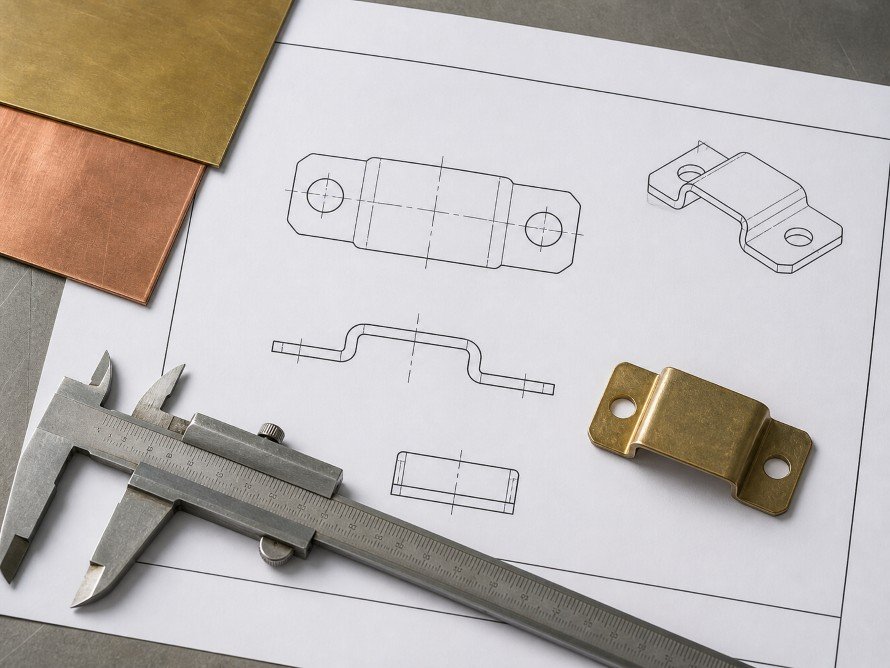
Use the end function to narrow the material choice. A simple decision framework can prevent a material specification from creating unnecessary production risk.
| Primary Requirement | Often Worth Evaluating First | Questions to Ask |
| Maximum conductivity | Copper | What current, temperature and contact performance are required? |
| Spring or retention force | Brass | How much deflection and shape retention does the part need? |
| Decorative appearance | Brass | Is the part visible, plated or protected after stamping? |
| Thermal transfer | Copper | Does the component need to move heat as well as carry current? |
| Complex formed geometry | Either, depending on alloy and temper | Are the material condition and bend radii compatible with the design? |
Do not treat this table as a substitute for engineering review. Two parts with similar shapes can require different material choices because of their thickness, loading, finish, tolerance or environment.
If your application involves lower weight as a key objective, compare the material decision with Aluminum Stamping: What Engineers Should Know. If corrosion resistance and higher-strength stainless options are also under review, see Stainless Steel Stamping: Benefits, Challenges and Applications.
Mold and Process Planning Considerations
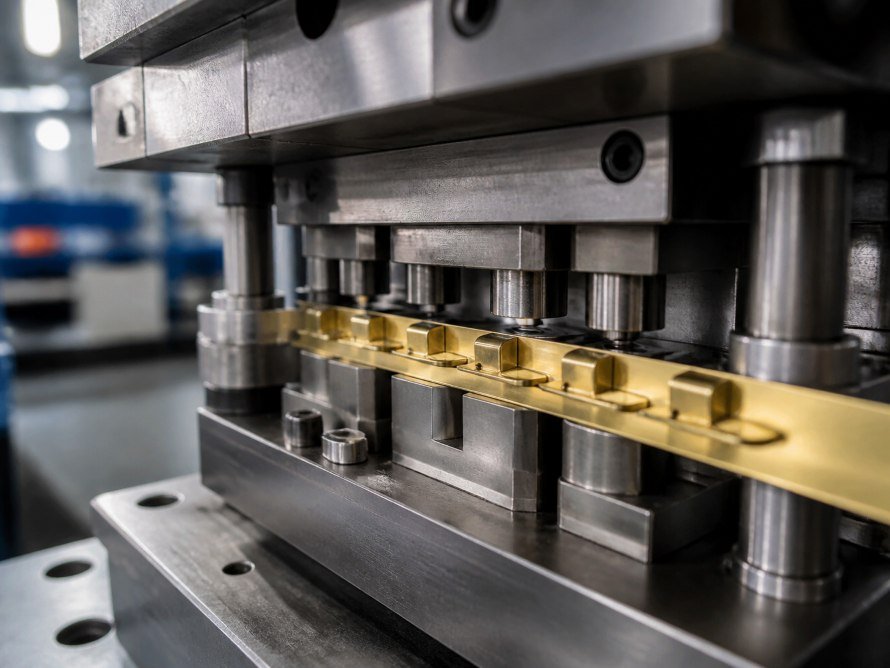
Material selection affects more than the finished part. It also affects how the component is produced. Brass and copper can respond differently to cutting, bending, forming and surface handling, so the Mold concept should be reviewed around the selected material rather than reused without adjustment.
For repeat production, a progressive Mold process may combine multiple operations as strip material advances through the tool. This can be effective for suitable component geometry and volume requirements. Learn more in our guide to progressive Mold stamping.
Before production, confirm:
- Material alloy, temper and thickness
- Critical dimensions and functional tolerances
- Burr direction and edge-condition expectations
- Bend locations and formed contact features
- Surface finish, plating or protective treatment
- Required production volume and packaging method
A focused DFM review helps identify features that may affect material flow, springback, contact performance or cosmetic quality before Mold manufacturing begins. This is one reason to assess a supplier’s material knowledge and process-planning approach before selecting a manufacturing partner. How to choose a precision metal stamping manufacturer in China.
Typical Applications
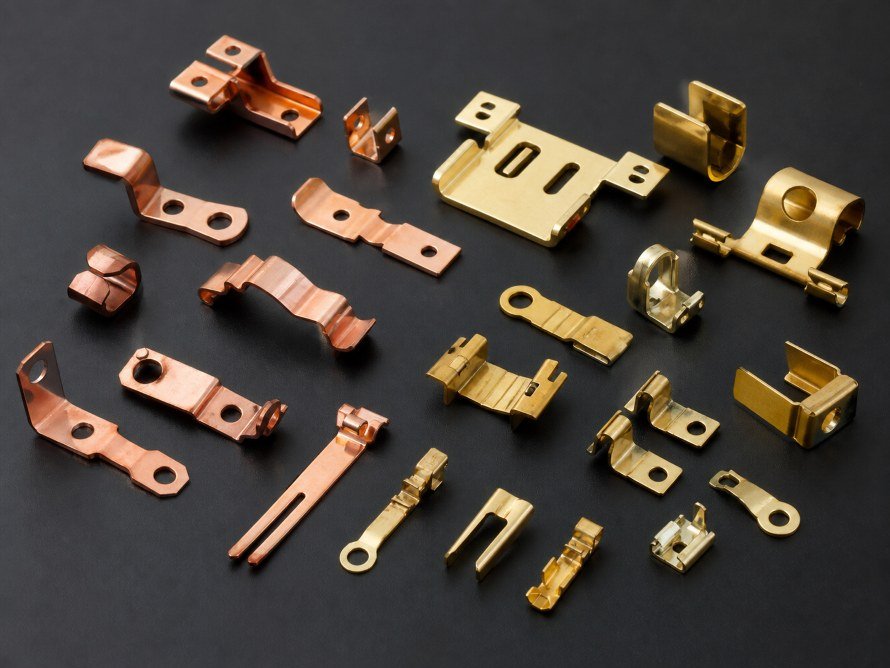
Brass and copper stamped parts are used in many electrical, industrial and consumer-product applications.
| Application Area | Copper May Be Considered For | Brass May Be Considered For |
| Electrical systems | Conductive terminals, connectors and contact paths | Formed contacts, clips and retention features |
| Electronics | Conductive shielding or heat-related components | Small formed hardware and mounting features |
| Industrial equipment | Conductive parts and electrical interfaces | Fittings, clips, brackets and hardware |
| Consumer products | Functional conductive elements | Decorative or visible formed components |
The final material choice should be made with the part’s entire assembly in mind. A stamped contact may also need to be plated, inserted into a housing, joined to another component or exposed to a specific environment. Those downstream requirements can be as important as the original stamping operation.
What to Include in a Brass or Copper Stamping RFQ
A clear RFQ gives a manufacturer the information needed to assess feasibility and recommend a suitable process.
- 2D drawing and, when available, 3D model
- Material alloy, temper, thickness and required finish
- Critical tolerances and functional contact requirements
- Expected production quantity and forecast volume
- Surface, plating and cosmetic requirements
- Secondary operations and assembly needs
- Packaging and delivery expectations
The more clearly the functional requirement is defined, the easier it is to evaluate whether brass or copper is the more appropriate material for the stamped component.
FAQ
Is brass stronger than copper for stamped parts?
Many brass alloys provide greater strength and stiffness than pure copper, but the actual result depends on the selected alloy, temper, thickness and part geometry. Material should be selected against the part’s functional requirement.
Is copper always better for electrical contacts?
Copper is often valued for conductivity, but contact performance also depends on geometry, contact force, surface finish, plating and the operating environment. Brass may be suitable when a formed contact needs more spring or retention performance.
Can brass and copper both be used in progressive Mold stamping?
Both materials can be used in repeat stamping processes when the Mold design, material condition and component geometry are matched appropriately. A DFM review should confirm the process before Mold manufacturing begins.
What is the most important information to provide before quoting?
Provide the drawing, material specification, thickness, finish, critical tolerances, forecast volume and any secondary-operation requirements. This helps establish a practical manufacturing route.
Need Brass or Copper Stamped Parts?
Dongguan Xiyu Hardware & Electronic Co., Ltd. supports OEM/ODM projects with Mold design and manufacturing, precision metal stamping, CNC machining, turning and sheet metal fabrication capabilities. Send your drawings, material requirements and volume expectations to discuss a suitable manufacturing approach for your brass or copper stamped parts.