Welcome to XiYu

CNC Machining in China: Buyer’s Guide for Custom Parts
A practical buyer’s guide to sourcing custom CNC parts from China, covering process selection, materials, tolerances, cost, prototypes, quality checks, and RFQs.

Sourcing custom parts through CNC machining in China can give product teams access to a broad manufacturing ecosystem, but the best results do not come from choosing a supplier based on price alone. A successful project starts with a clear technical package, a realistic process choice, and an agreed method for reviewing quality before production moves forward.
This guide explains how buyers can evaluate CNC machining in China for custom parts—from choosing milling or turning, to selecting materials, defining tolerances, planning prototypes, comparing quotations, and preparing an RFQ that supports an accurate manufacturing review.
What Does CNC Machining in China Include?
CNC machining is a subtractive manufacturing method. A programmed machine removes material from a metal or engineering-plastic workpiece until the required geometry is produced. It is commonly used for prototypes, low-to-medium-volume parts, fixtures, housings, brackets, shafts, fittings, and components that need controlled dimensions or specific surface conditions.
When sourcing CNC machining in China, buyers are usually assessing more than the cutting operation itself. The practical scope of a project may include:
- Review of drawings, CAD models, material and critical requirements
- Process selection between milling, turning, or a combined approach
- Raw-material sourcing and traceability requirements, where specified
- Workholding and machining sequence planning
- Deburring, cleaning, surface-treatment coordination, or assembly needs
- Dimensional inspection and reporting requirements
- Packaging and shipment requirements for finished custom CNC parts
The supplier should understand which requirements are functional, which are cosmetic, and which dimensions are critical to the final assembly. That distinction affects machining sequence, inspection planning, cost, and risk.
Start With the Part Requirements, Not the Machine List
A buyer does not need to prescribe every manufacturing step. However, the supplier needs enough information to determine whether the part can be made reliably and how it should be quoted.
Before requesting CNC machining in China, prepare the following information.
| RFQ item | Why it matters |
|---|---|
| 2D drawing with dimensions and tolerances | Identifies critical features, inspection points, threads, radii, and datum references |
| 3D CAD model | Helps the supplier understand overall geometry and plan machining operations |
| Material grade or approved alternatives | Affects machinability, performance, cost, and finishing options |
| Surface finish requirements | Clarifies cosmetic expectations, roughness needs, coating, anodizing, polishing, or passivation requirements |
| Quantity and forecast | Helps determine whether prototype, bridge, or repeat-production planning is appropriate |
| Assembly context | Shows which dimensions, holes, interfaces, or appearance areas are most important |
| Packaging and labeling needs | Helps protect finished parts and support receiving or assembly workflows |
If a drawing is incomplete, it is better to identify open points early than to assume the supplier will interpret every feature in the same way as the design team. A structured clarification process is especially important when a part has mating components, sealing interfaces, threaded features, cosmetic faces, or functional tolerances.
Choose the Right CNC Process: Milling, Turning, or Both
The first technical decision is usually the basic process family.
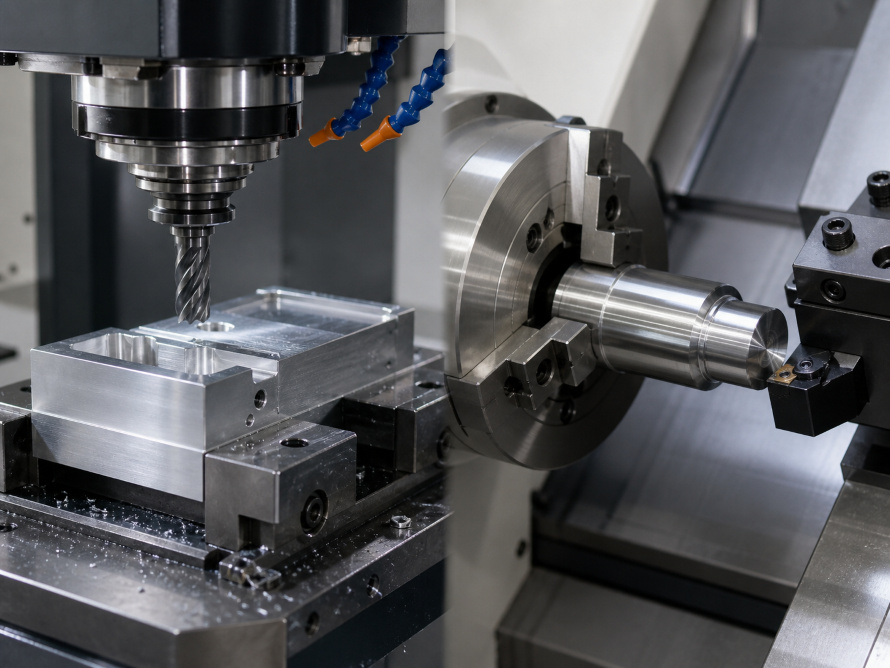
CNC milling for prismatic and complex features
CNC milling is typically used for parts with flat faces, pockets, slots, drilled holes, contours, cavities, and multi-sided geometry. It is often appropriate for housings, brackets, plates, fixtures, manifolds, and structural components.
For a closer explanation of machining strategy and part geometry, see What Is CNC Milling and How Does It Work?.
CNC turning for round or rotational parts
CNC turning is commonly used when the main geometry is cylindrical or rotational. Typical examples include shafts, bushings, pins, threaded fittings, collars, and stepped diameters. Turning can be efficient when the part’s critical features are concentric around a central axis.
Read What Is CNC Turning and When Is It Used? for a practical overview.
When a part needs more than one operation
Some custom CNC parts combine turned diameters with milled flats, cross holes, keyways, or other secondary features. In these cases, the key question is not whether one process is “better,” but how the work should be sequenced to protect critical references and manage handling between operations.
If the choice is unclear, this comparison of CNC Turning vs CNC Milling can help buyers identify the dominant geometry and discuss the right process with a supplier.
Select Materials Based on Function, Not Just Unit Price
Material selection affects part performance, machining time, tooling behavior, finishing choices, and total project cost. The lowest raw-material price does not always create the lowest landed cost or the most reliable result.

Common CNC machining materials include:
- Aluminum alloys for lightweight structures, housings, fixtures, and components that may require anodizing
- Stainless steels for corrosion resistance, strength, and demanding service environments
- Carbon steels and alloy steels for strength-oriented mechanical components
- Brass and copper alloys for electrical, thermal, or corrosion-related applications
- Engineering plastics where weight, electrical insulation, chemical resistance, or reduced friction is important
For a broader material overview, refer to What Materials Can Be CNC Machined?.
Aluminum machining considerations
Aluminum is frequently selected for its favorable strength-to-weight ratio and good machinability. However, the required grade, wall thickness, thread design, cosmetic expectations, and anodizing requirements should be confirmed before quotation. These factors can influence both the process route and inspection approach.
For more detail, see CNC Aluminum Machining: Grades, Benefits and Applications.
Stainless steel machining considerations
Stainless steel may be appropriate where corrosion resistance or mechanical performance is important, but grade selection and feature design can influence machining difficulty. Buyers should identify the intended environment and any finishing or cleanliness requirement instead of specifying stainless steel as a general default.
For a buyer-focused guide, see CNC Machining Stainless Steel: What Buyers Should Know.
Define Tolerances That Support Function and Manufacturability
Tolerances should be assigned according to function. Tightening every dimension on a drawing can add machining and inspection effort without improving how the product works.
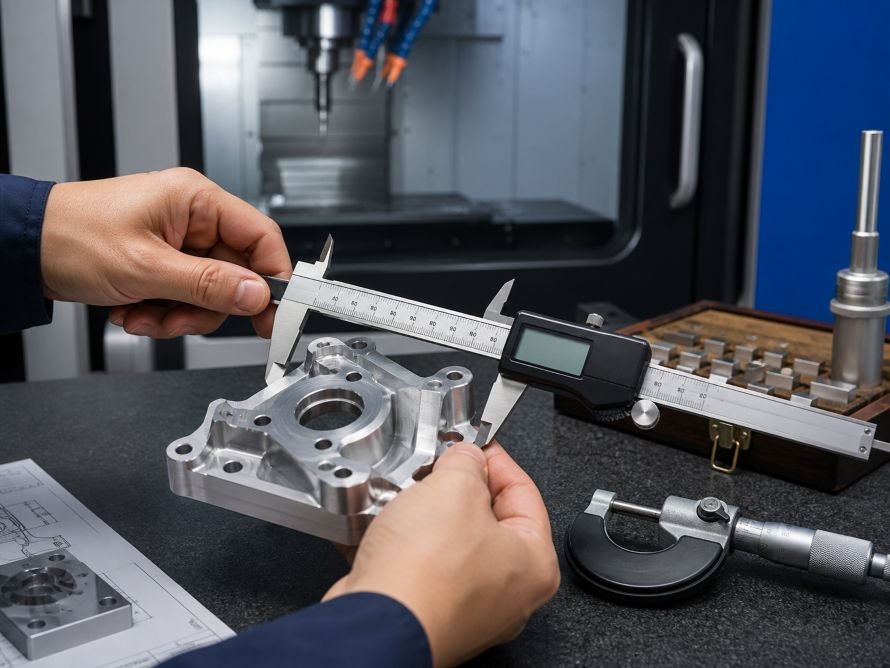
A practical approach is to identify:
- Dimensions that locate the part in an assembly
- Interfaces that affect fit, sealing, alignment, or motion
- Threaded and bearing-related features
- Cosmetic surfaces that need controlled handling
- Non-critical dimensions that can use a general tolerance
Buyers should also define datums clearly. A datum strategy helps the supplier understand how the part should be held, machined, and inspected. It also gives both sides a shared reference when reviewing measurements.
CNC Machining Tolerances: What Can You Achieve? explains how tolerance requirements relate to part geometry, materials, process control, and inspection planning.
Understand What Drives CNC Machining Cost
A quotation for CNC machining in China should be evaluated as a manufacturing plan, not merely as a price list. Two suppliers may quote the same drawing differently because they expect different material sources, setups, machining time, inspection steps, finishing routes, or packaging methods.
Key cost drivers typically include:
- Material type, form, availability, and stock allowance
- Part size and overall geometry
- Number of setups and machine orientations
- Deep cavities, thin walls, small radii, or difficult-to-reach features
- Tight tolerances and additional inspection requirements
- Quantity and repeat-order potential
- Surface treatment, assembly, marking, or special packaging requirements
For a detailed cost breakdown, read CNC Machining Cost: What Factors Affect Pricing?.
Cost reduction should be approached through design and process choices, not by removing controls that protect function. In many cases, simplifying non-functional features, consolidating dimensions, using practical tolerances, or selecting a more suitable material can create savings while preserving the intended result.
See How to Reduce CNC Machining Costs Without Sacrificing Quality for specific buyer considerations.
Use Prototypes to Reduce Risk Before Repeat Production
Prototype machining is valuable when a design needs functional testing, assembly verification, market evaluation, or design feedback before larger quantities are ordered. A prototype can reveal issues that are difficult to identify from a CAD model alone, such as tool access, wall stiffness, thread engagement, assembly interference, or an overly strict tolerance.
Prototype projects are most useful when feedback is documented and carried into the next drawing revision. Buyers should clarify whether the purpose of the first parts is visual review, functional testing, fit verification, or a production-representative sample. Each purpose may require a different level of finishing, inspection, or material control.
Learn more in CNC Prototype Machining: From CAD Drawing to Finished Part.
Evaluate a CNC Machining Supplier Beyond the Quote
A competitive price can be important, but it should be considered alongside communication quality and the supplier’s ability to review the project in a structured way.
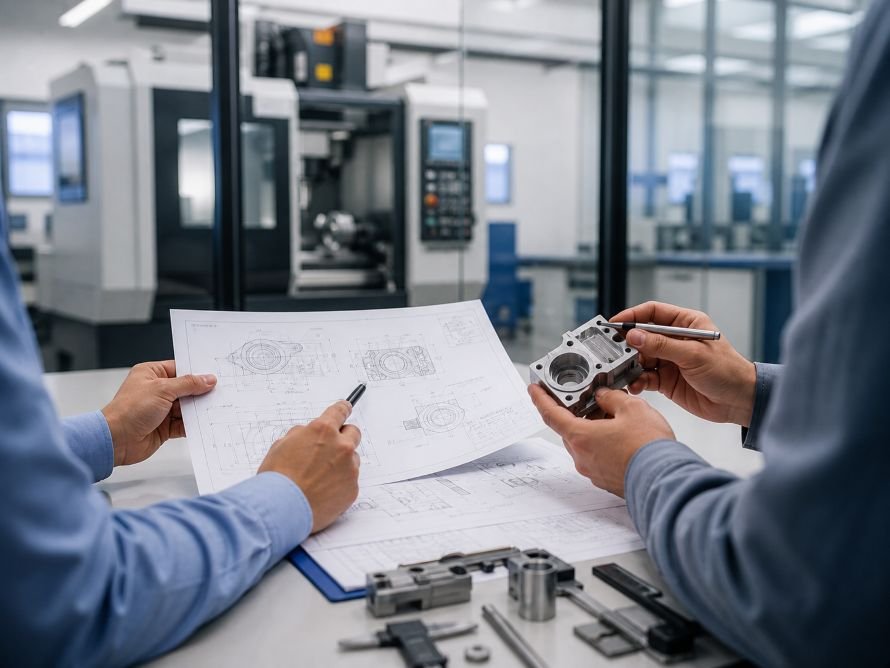
During supplier evaluation, ask how the team handles:
- Drawing review and clarification of missing information
- Material confirmation and substitutions
- Critical dimensions and inspection points
- Nonconforming parts or revision control
- Surface-finish and appearance requirements
- Packaging for the part’s geometry and cosmetic surfaces
- Communication during prototype approval and repeat orders
A useful supplier response normally addresses the specific part, rather than relying only on broad capability statements. For example, a meaningful review may identify a difficult internal corner, a tolerance that needs clarification, a surface-treatment masking issue, or a feature that could be redesigned for better tool access.
Build a Clear RFQ for Custom CNC Parts
A complete RFQ helps suppliers quote more accurately and makes the comparison between quotations more useful. When sending an RFQ, include a short summary in addition to the drawing package.
Suggested RFQ checklist
- Part number and revision level
- 2D PDF drawing and 3D model
- Required material and finish
- Quantity for prototype and expected repeat orders, if known
- Critical dimensions and cosmetic requirements
- Inspection report or first-article requirements
- Assembly or mating-part information, if relevant
- Packaging, labeling, and delivery destination
- Target timing for quotation and technical feedback
It is also useful to ask suppliers to identify assumptions in their quotation. This reduces the chance that two quotes appear comparable while covering different materials, finishes, inspection levels, or packaging methods.
Frequently Asked Questions
Is CNC machining in China suitable for prototypes?
Yes. CNC prototype machining can support functional testing, fit checks, and design review before repeat production. The RFQ should state the prototype purpose and any production-representative requirements.
Should I choose milling or turning for my part?
Choose based on the dominant geometry. Milling is generally suited to prismatic or multi-sided features, while turning is suited to cylindrical or rotational geometry. Some parts require both processes.
What should I include in a CNC machining RFQ?
At minimum, provide a 2D drawing, 3D model, material, finish, quantity, critical tolerances, and inspection expectations. Assembly information and packaging needs are also helpful.
How can I compare CNC machining quotations fairly?
Compare the technical assumptions, not just the total price. Check material, process route, tolerance coverage, finishing, inspection, packaging, quantity basis, and any stated exclusions.
Request a Review for Your Custom CNC Parts
For a CNC machining project in China, send your drawing, 3D model, material requirements, quantity, and critical features for review. Dongguan Xiyu Hardware can assess custom CNC part requirements alongside its precision hardware manufacturing services and help clarify the information needed for an RFQ.
Contact Xiyu Hardware about your custom CNC machining project.