Welcome to XiYu

CNC Machining Cost: What Factors Affect Pricing?
Learn which factors affect CNC machining cost, including material, part complexity, tolerances, finishing, inspection and production quantity.


CNC machining cost is not based on one number alone. Two parts with a similar overall size can have very different prices because their material, geometry, tolerance requirements, surface finish, production quantity, and inspection needs are different.
For buyers and engineers, the most useful approach is not simply to ask, “What is the cheapest price?” It is to understand which requirements create cost, which ones are essential for part function, and where a design can be simplified without sacrificing quality.
This guide explains the main factors that affect CNC machining cost and what to include in an RFQ for a clearer quotation.
The Main Factors That Affect CNC Machining Cost
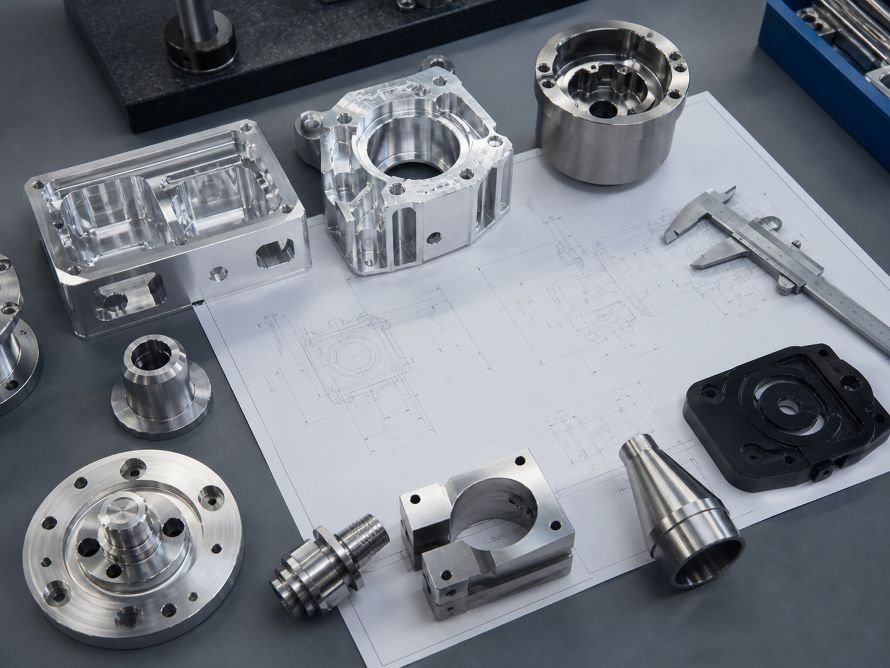
Most CNC part pricing is influenced by the combined effect of machining time, material usage, setup work, quality control, and any secondary operations.
| Cost factor | Why it affects pricing | Buyer consideration |
|---|---|---|
| Part geometry | Complex features can require longer machining time and more setups | Identify which features are function-critical |
| Material | Material price and machinability vary by grade | Specify the required grade or approved alternatives |
| Tolerances | Tight tolerances may need slower machining and more inspection | Apply critical tolerances only where needed |
| Surface finish | Secondary finishing adds handling and processing steps | Define the required cosmetic or functional finish |
| Order quantity | Setup cost is spread across the total number of parts | Share prototype and production quantities separately |
| Inspection | Critical dimensions may require additional measurement time | Highlight key quality requirements in the drawing |
The goal is not to remove every cost driver. Instead, it is to make sure each requirement has a clear functional reason.
How Part Design Changes Machining Cost
Part geometry is often one of the largest CNC machining cost factors. Features that take more machine time, require additional tool changes, or need multiple setups can increase the final part price.
Examples include:
- Deep cavities and narrow internal corners
- Thin walls that may need more careful cutting strategies
- Features machined from several sides
- Fine threads, small holes, or long unsupported sections
- Tight positional requirements between multiple features
A part with simple outside profiles and accessible holes may be produced more efficiently than a part with deep internal pockets and complex internal features. If the part design includes milled slots, pockets, or multi-face features, understanding the basics of CNC milling can help during drawing preparation.
Small design changes can sometimes improve machinability. For example, using realistic internal corner radii, avoiding unnecessary thin walls, and reducing non-functional cosmetic surfaces may help lower machining time.
Material Selection and Its Cost Impact
Material affects CNC machining cost in two ways: the price of the raw stock and the effort needed to machine it.
| Material consideration | Potential pricing effect |
| Raw material availability | May influence procurement time and stock cost |
| Material hardness | Harder materials can increase tool wear and machining time |
| Corrosion-resistance requirement | May require a higher-grade material or additional finishing |
| Material removal volume | More removed material can mean longer cycle time |
Aluminum is often selected when low weight and efficient machining are important. Stainless steel may be selected for strength or corrosion resistance, but it can require more machining effort depending on the grade and part design.
For a broader material overview, see What Materials Can Be CNC Machined?. If stainless steel is under consideration, CNC Machining Stainless Steel: What Buyers Should Know explains why grade selection and machining requirements matter.
Tolerances, Inspection, and Quality Requirements
Tight tolerances are important when a feature affects fit, sealing, alignment, motion, or assembly. However, applying the same tight tolerance to every dimension can increase cost without adding value.
| Requirement | Possible effect on CNC machining cost |
| Critical dimensional tolerance | May require more controlled machining and inspection |
| Geometric tolerance | Can add setup, measurement, and reporting effort |
| Surface roughness requirement | May require specific tooling or secondary finishing |
| Thread and fit requirements | May need gauges or additional verification |

A clear drawing should identify which dimensions are critical and which dimensions can follow general tolerances. This helps the machining team focus quality controls where they matter most.
Why Quantity Changes Unit Price
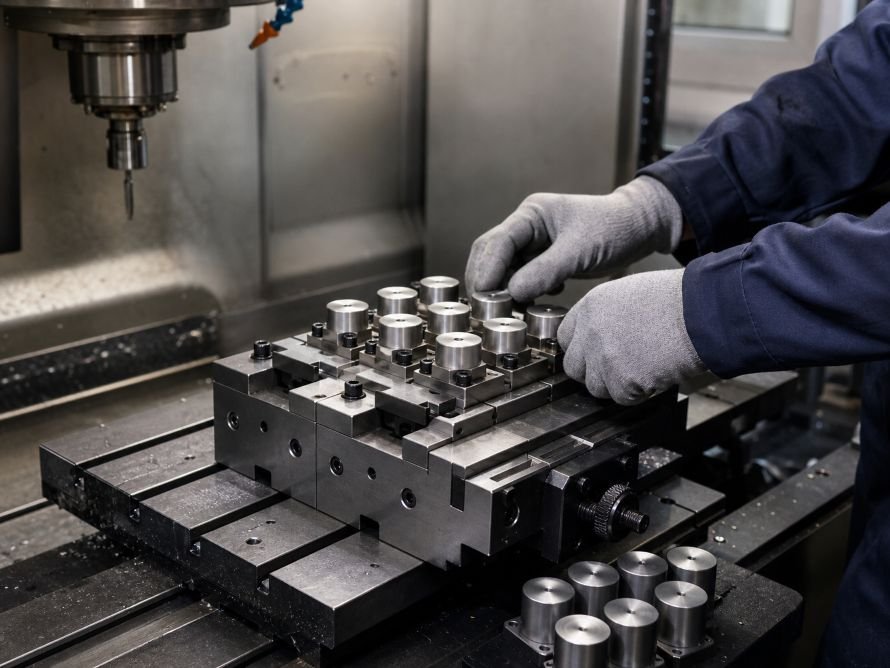
CNC machining usually includes both one-time and repeatable costs. One-time work can include programming, setup, fixture preparation, first-piece review, and process planning. Repeatable work includes material, machining cycle time, inspection, finishing, and packing for each part.
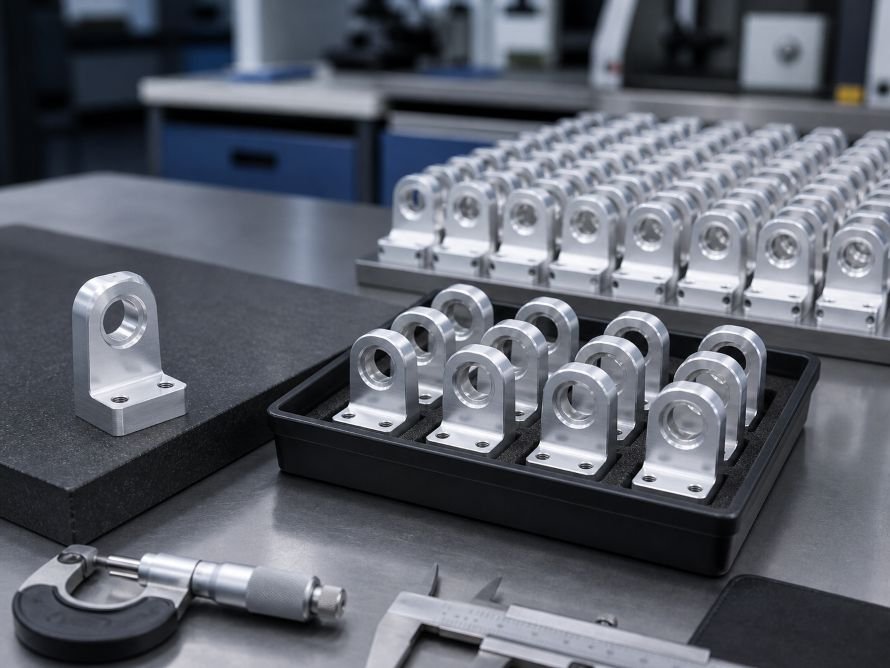
For a prototype order, these one-time activities are spread across only a few parts. For a larger production order, the same setup cost can be distributed across more units.
This does not mean every high-volume part should use the same process. The best approach depends on geometry, material, expected demand, and product lifecycle. Providing both your prototype quantity and estimated annual demand can support a more useful quotation discussion.
What to Include in a CNC Machining RFQ
A complete RFQ reduces assumptions and makes supplier quotations easier to compare.
| RFQ information | Why it helps |
| 2D drawing and 3D model | Defines geometry, tolerances, threads, and key features |
| Material specification | Confirms material cost and machining approach |
| Quantity | Clarifies setup-cost allocation and production planning |
| Surface finish requirement | Identifies secondary operations and appearance expectations |
| Critical dimensions | Helps plan inspection and quality controls |
| Application details | Provides context for material and functional decisions |
If some requirements are still under review, state this clearly. A supplier may be able to quote options based on different materials, finishes, or tolerance levels.
For a broader framework for sourcing custom CNC parts, including process, material, tolerance, prototype, quality, and supplier-evaluation decisions, see our CNC machining in China buyer’s guide.
FAQ
What is the biggest CNC machining cost factor?
For many custom parts, machining time is one of the largest factors. Complex geometry, difficult material, multiple setups, and tight tolerances can all increase cycle time.
Does a tighter tolerance always increase CNC machining cost?
Not always, but it often increases machining and inspection effort. Tolerances should be specified according to functional needs rather than applied uniformly across every feature.
Is CNC machining cheaper for larger quantities?
The unit price may decrease as setup and programming costs are spread across more parts. However, the best production method still depends on the part design, quantity, and long-term demand.
Can changing the material reduce CNC part cost?
Possibly. Material choice affects both stock cost and machinability. Any alternative should first be evaluated against the part’s strength, corrosion resistance, temperature, and application requirements.
Need a CNC Machining Quote?
A complete drawing package, clear material requirements, quantity information, and defined critical features provide the best starting point for a CNC machining quotation.
Contact Xiyu Hardware to discuss your custom part requirements.