Welcome to XiYu

How Tight Can Metal Stamping Tolerances Be?
Learn what determines metal stamping tolerances, how to identify critical dimensions, and how DFM supports reliable custom stamped parts.


Metal stamping tolerances can be very tight, but there is no single tolerance that applies to every stamped part. The achievable result depends on the part geometry, material, thickness, critical features, stamping Mold design, production process, and inspection method.
For engineers and buyers, the practical question is not simply “How tight can metal stamping tolerances be?” It is which dimensions truly affect fit, function, assembly, or appearance—and how to control those dimensions efficiently in production. A well-planned precision metal stamping project starts by separating critical requirements from dimensions that can allow more variation.
Why There Is No Single Metal Stamping Tolerance
A stamped part is formed through cutting, bending, drawing, or other operations. Each feature responds differently to material behavior and tooling conditions. A hole location, a formed flange, and a flat surface should not automatically receive the same tolerance requirement.
| Part Feature | Main Factors That Affect Control | Drawing Consideration |
|---|---|---|
| Hole size and position | Material behavior, Mold alignment, feature-to-edge distance | Identify holes used for fasteners, locating pins, or mating parts |
| Outside profile | Cutting process, material thickness, part geometry | Highlight profiles that affect assembly clearance |
| Bent features | Bend geometry, material springback, grain direction | Define the functional angle and datum relationship |
| Flatness | Part shape, forming sequence, residual stress | Specify only where flatness affects sealing, mounting, or appearance |
| Formed details | Feature depth, material flow, Mold design | Review deep or narrow forms early with the manufacturer |
The goal is repeatable production, not an unnecessarily tight number on every dimension.
What Determines Metal Stamping Tolerances?
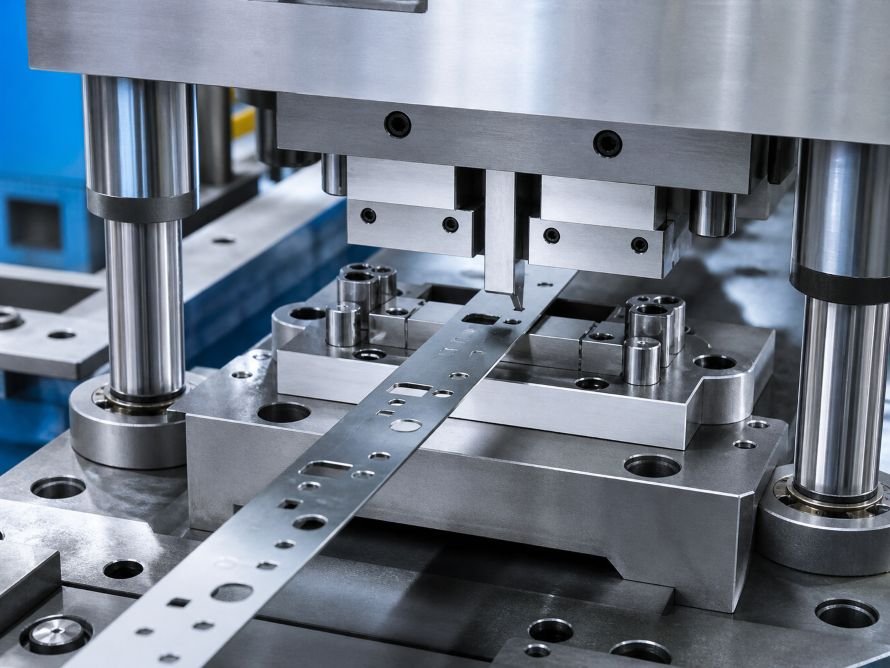
Several variables work together to determine how consistently a stamped part can meet its drawing requirements.
- Material type and thickness: Different metals respond differently to cutting and forming. Material selection should be reviewed together with the tolerance plan.
- Part geometry: Small holes, narrow bridges, deep forms, and closely spaced features often require more process attention.
- Mold design and condition: Guide systems, clearances, feature sequence, and regular maintenance all influence consistency.
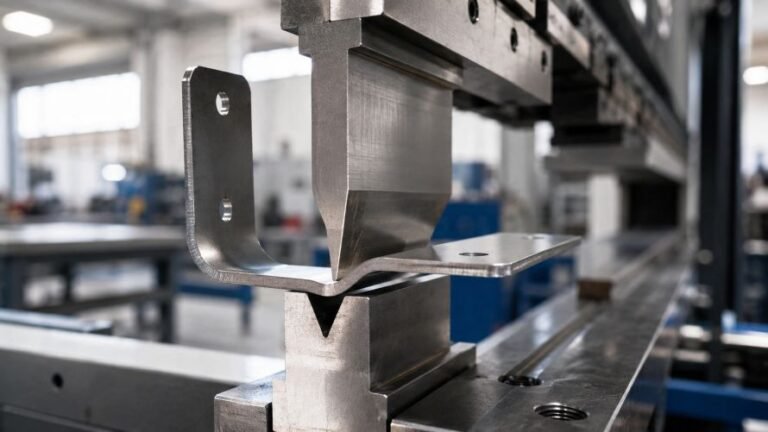
- Forming and springback: Bent or formed features can change after the press stroke, especially when geometry and material properties interact.
- Production volume: A prototype run and a sustained production program may require different control methods.
- Inspection method: A requirement must be measurable. Functional gauges, calipers, fixtures, or coordinate inspection should match the feature’s importance.
Material behavior deserves early attention. For example, stainless steel stamping can require careful planning for strength, forming behavior, and springback. Material selection also matters when comparing conductive materials such as brass and copper for stamped metal parts.
Which Dimensions Should Receive Tighter Control?
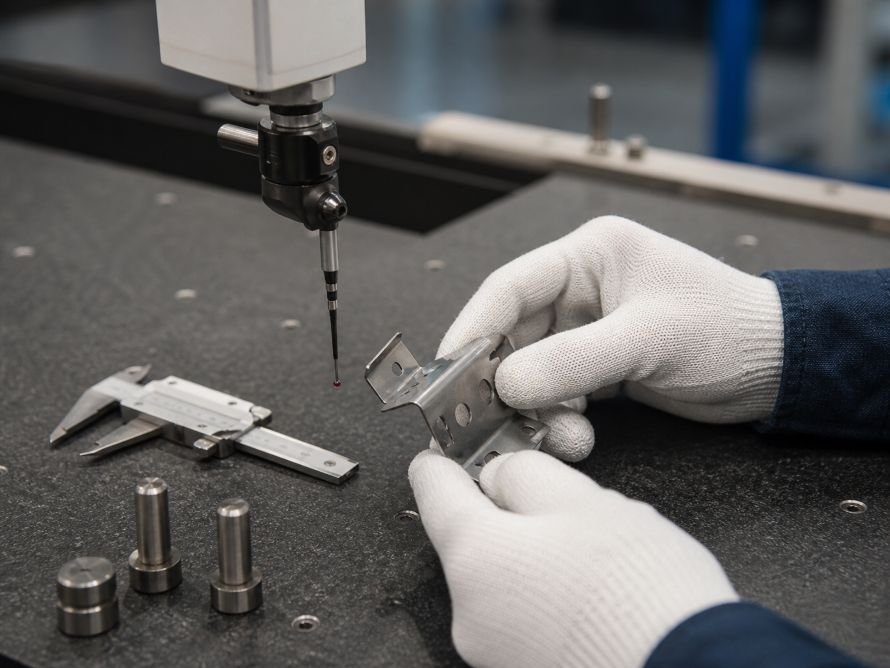
Tight control is most valuable when a dimension has a direct functional purpose. Typical examples include:
- Hole positions that align with another component
- Features that locate a part in an assembly
- Tabs, slots, or bends that affect fit
- Surfaces used for sealing, mounting, or electrical contact
- Cosmetic edges or visible interfaces
- Dimensions used by an automated assembly fixture
Other dimensions may only need to remain within a practical manufacturing range. Applying the same tight requirement everywhere can increase inspection effort, Mold complexity, and production cost without improving the finished product.
How DFM Supports Better Tolerance Control
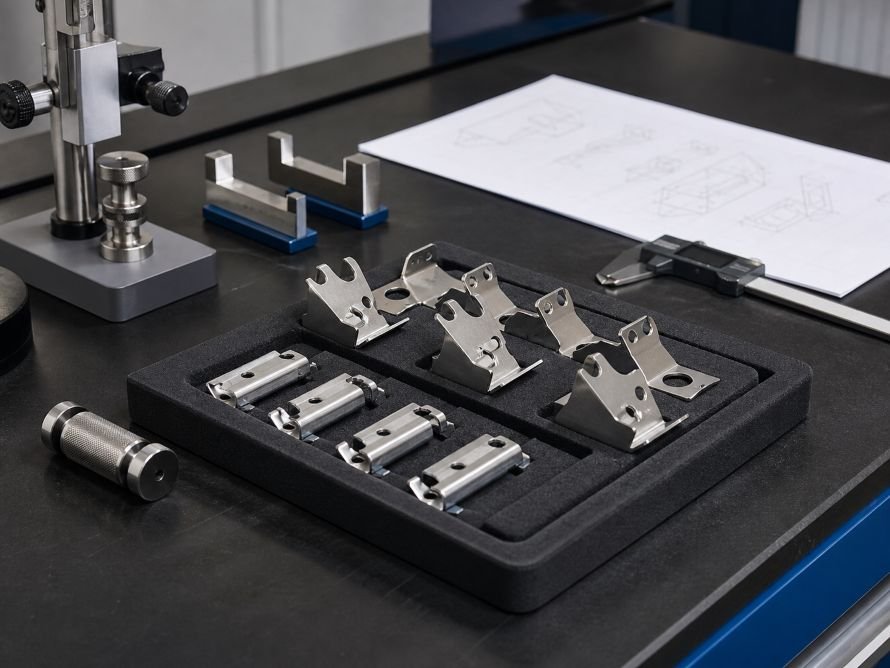
Design for manufacturability is one of the most effective ways to improve tolerance performance before production begins. A productive DFM review looks at the part as a system rather than as isolated dimensions.
Start by sharing:
- A clear drawing with dimensions and revision status
- The material specification and thickness
- Critical-to-function features
- Mating-part or assembly information when relevant
- Surface finish, burr, cosmetic, or packaging expectations
- Expected production volume and inspection needs
It also helps to discuss whether a feature is cut, formed, or both. The right process sequence can reduce variation and make the part easier to inspect. If the design is still open, reviewing commonly used metal stamping materials alongside the drawing can prevent avoidable changes later. A supplier’s response to these DFM and inspection questions is also a useful part of the selection process. How to choose a precision metal stamping manufacturer in China.
Tolerance, Cost, and Production Reliability
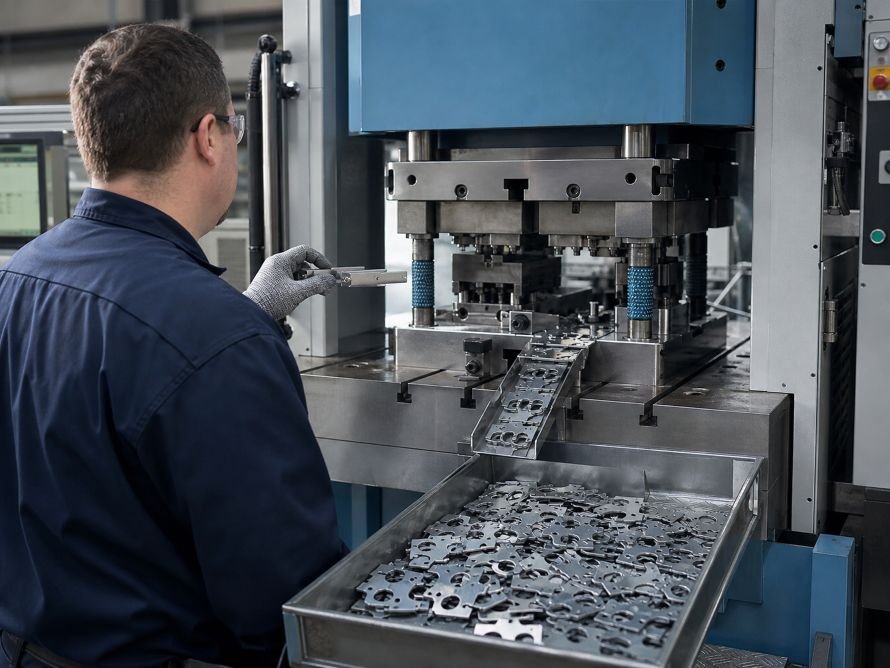
A tighter requirement is not automatically better. It can require more precise Mold work, additional process controls, more frequent inspection, or a dedicated checking fixture. Those measures may be justified for a critical feature, but they should support a real product need.
| Requirement Level | Practical Manufacturing Approach |
| Functional-critical feature | Define the datum, measurement method, and mating relationship clearly |
| Assembly-related feature | Confirm clearance, location, and forming sequence during DFM review |
| Cosmetic feature | Define the acceptable appearance and edge condition |
| General non-critical feature | Use a practical drawing tolerance that supports efficient production |
The most cost-effective approach is to focus precision where it protects product performance. This supports both stable quality and a more efficient supply chain.
How to Prepare a Tolerance-Ready Stamping Drawing
Before requesting a quote, review these points with your engineering and sourcing teams:
- Mark dimensions that affect fit, function, safety, or appearance.
- Establish clear datums for critical feature locations.
- Avoid applying the tightest tolerance to every dimension by default.
- Specify the material and thickness rather than relying only on a general material name.
- Clarify burr direction or edge expectations where they matter.
- Share mating-part information when assembly fit is critical.
- Ask how each critical feature will be checked during production.
FAQ
Can metal stamping hold tight tolerances on hole locations?
Yes, hole locations can be controlled effectively when the drawing identifies the correct datums, the feature is suitable for the part geometry, and the Mold and inspection method are designed around the requirement.
Are formed features harder to control than flat features?
They can be. Formed features are influenced by material behavior and springback, so the part geometry, material, and forming sequence should be reviewed together.
Should every dimension have a tight tolerance?
No. Tight tolerances should be reserved for dimensions that affect function, assembly, appearance, or a customer-critical requirement. This helps avoid unnecessary cost and inspection work.
When should tolerance requirements be reviewed?
The best time is before Mold construction or production release. Early DFM feedback gives the project team more options to adjust geometry, materials, or inspection planning.
Discuss Your Stamping Drawing With Xiyu Hardware
If you are sourcing a custom stamped part, send your drawing, material requirement, key dimensions, and expected volume for a practical manufacturability review. Xiyu Hardware can help evaluate tolerance priorities, Mold considerations, and inspection needs before production.