Welcome to XiYu

Prototype Stamping vs Production Stamping: What Is the Difference?
Compare prototype metal stamping and production stamping to choose the right route for design validation, Mold planning, quality checks, and volume.

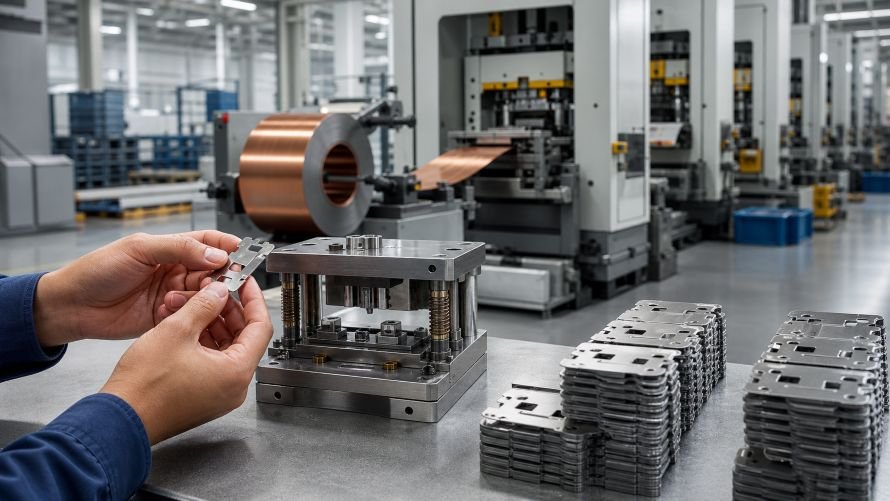
Prototype stamping and production stamping both turn sheet metal into functional parts, but they support different decisions in a project. Prototype metal stamping helps a team validate part geometry, material behavior, and assembly fit before committing to a long-term production route. Production stamping focuses on repeatability, process stability, and efficient output once the part design and demand are clearer.
Choosing between them is not simply a question of quantity. It also depends on how complete the drawing is, how much design risk remains, which features matter most, and how the part will move from testing to regular supply.
Prototype Stamping and Production Stamping Serve Different Decisions
Prototype stamping is typically used during product development or before a new component is released. The goal is to obtain real parts for evaluation, testing, fit checks, or a limited initial build.
Production stamping is used when the part design, material choice, and manufacturing route are sufficiently defined for recurring manufacture. The process is planned around stable output, controlled quality, and the expected production volume.
| Consideration | Prototype Stamping | Production Stamping |
|---|---|---|
| Primary goal | Validate the part and manufacturing approach | Produce repeatable parts for ongoing demand |
| Design status | May still be evolving | Usually more stable and released |
| Typical quantity | Small batches or early builds | Recurring or higher-volume requirements |
| Tooling approach | Selected for flexibility and learning | Planned for consistency and production efficiency |
| Engineering focus | Fit, form, material response, and design feedback | Process control, quality planning, and output stability |
| Change tolerance | Better suited to further refinement | Changes should be managed carefully to protect continuity |
Both routes can be part of the same project. A prototype phase often reduces uncertainty before the team commits to a production-focused Mold strategy.
What Prototype Stamping Is Best For
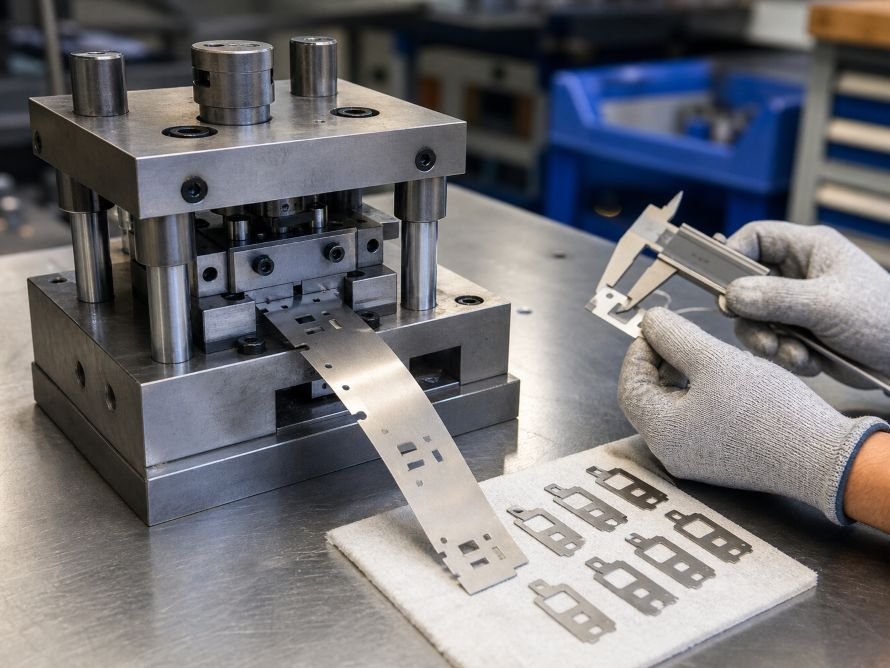
Prototype metal stamping is useful when a drawing looks complete on screen but still needs physical confirmation. A sample part can reveal issues that are difficult to judge from CAD alone, such as how a formed feature interacts with a mating component or whether a selected material behaves as expected.
Prototype work can help a project team:
- Check fit and assembly with surrounding components.
- Review critical dimensions and functional features.
- Compare material options or thicknesses where appropriate.
- Identify features that may benefit from design-for-manufacturability refinement.
- Support early testing, pilot builds, or customer evaluation.
- Gather clearer information before planning regular production.
For example, a bracket with multiple bends, slots, and holes may be dimensionally possible in a drawing but still require an evaluation of material flow, forming sequence, and inspection points. Reviewing the part alongside the precision metal stamping process can help buyers and engineers ask more useful questions before moving forward.
Prototype stamping should not be treated as a shortcut around manufacturing planning. It is most valuable when the learnings are carried into the next decision: whether the part is ready for a stable production route.
What Production Stamping Is Best For
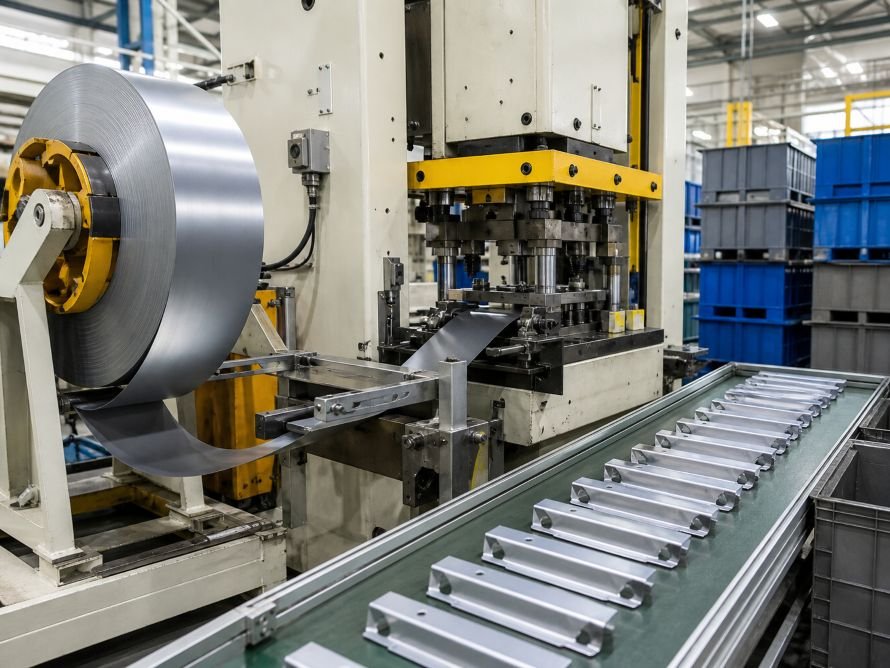
Production stamping is intended for parts that need to be made consistently over time. Once the design is more stable, the manufacturing plan can focus on repeatability, material handling, inspection planning, and the most suitable Mold configuration.
For suitable projects, a progressive Mold stamping approach can combine multiple operations as the material advances through the process. Learn more about the progressive Mold stamping process when evaluating a high-repeatability production route.
Production planning usually considers:
- Expected demand and delivery pattern.
- Material specification and supply consistency.
- Critical dimensions and inspection methods.
- Part handling and packaging requirements.
- Secondary operations, if needed.
- Mold maintenance and process-control needs.
- The cost impact of scrap, rework, and unnecessary complexity.
The benefit is not just more output. A well-planned production route gives the buyer and supplier a clearer basis for controlling quality and managing changes.
Key Differences That Affect Your Decision
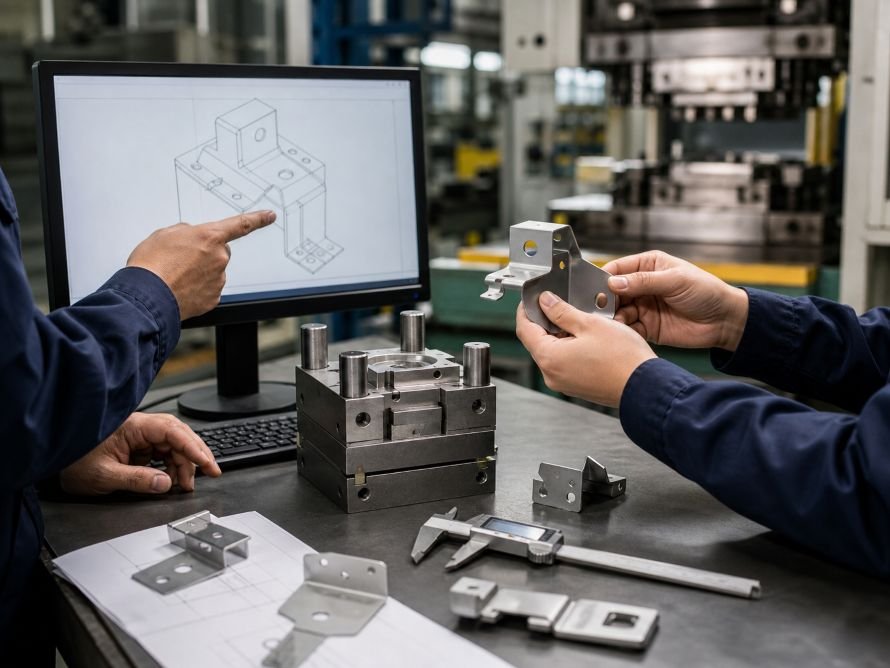
The most important difference is the project stage. Prototype stamping supports learning. Production stamping supports repeatability.
Design Changes
A prototype stage is often appropriate when the component may still change after testing. Adjusting holes, bends, material, or other features is easier to discuss before a production-focused Mold plan is finalized.
Once a part enters production, design changes should be reviewed carefully. Even a small revision can affect forming, inspection, assembly fit, material use, or downstream operations.
Tooling and Process Planning
Prototype work may use a manufacturing route selected for flexibility and faster learning. Production work requires a longer-term view of the part, including the operations required, expected volume, material feed, and quality checkpoints.
The purpose is not to make every project follow the same route. It is to match the Mold and process strategy to the maturity of the product and the commercial plan.
Quality Expectations
Prototype parts should still be evaluated against the dimensions and functional requirements that matter to the application. However, the prototype phase is also where a team can confirm which characteristics need the closest control in regular production.
If a drawing includes demanding dimensions, it is helpful to define which ones are function-critical rather than applying the same requirement everywhere. Our guide to metal stamping tolerances explains why the tolerance strategy should reflect the part’s real function.
Cost Structure
Prototype and production parts should not be compared only by piece price. Prototype work may help prevent a larger cost problem later by exposing design or process issues early. Production planning, in turn, can improve the overall cost structure when the design and demand are stable enough to support it.
For a broader view of material use, DFM, quality planning, and Mold maintenance, see how to reduce metal stamping production costs.
How to Move From Prototype to Production
A smooth transition starts with documenting what the prototype run has confirmed and what still needs attention.
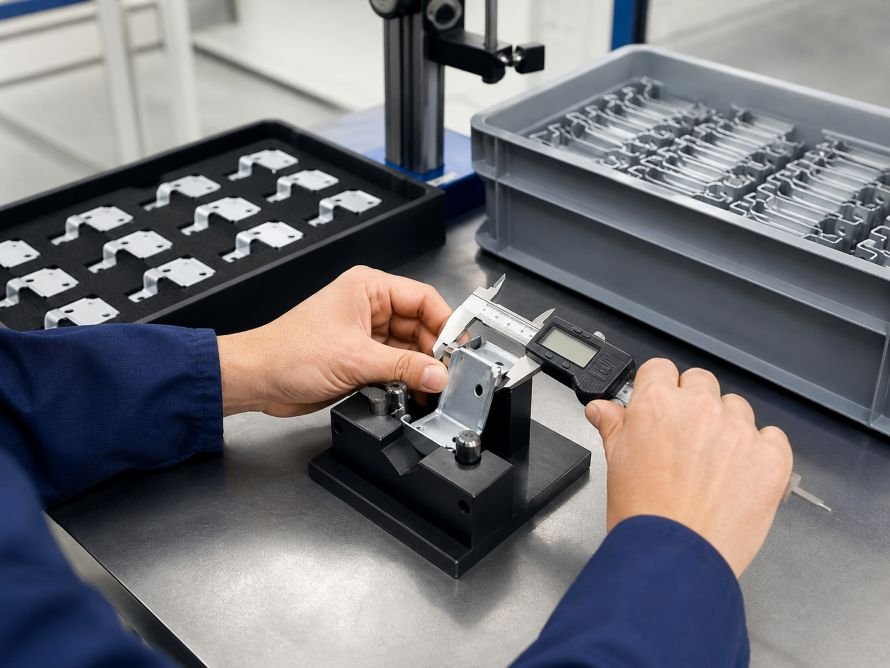
1. Review the Prototype Results
Compare the sample parts with the drawing, inspection needs, assembly interfaces, and intended application. Record any issues involving fit, forming, surface condition, or feature access.
2. Confirm the Production Requirements
Before selecting a production route, clarify the expected order pattern, material specification, critical dimensions, finishing needs, packaging expectations, and any required quality documentation.
3. Complete a DFM Discussion
A design-for-manufacturability review can identify features that create avoidable complexity or risk. The purpose is to make the part practical to produce while protecting the requirements that matter to the finished product.
4. Plan the Mold and Inspection Strategy
With the design more stable, the supplier and project team can align on the Mold approach, process sequence, part handling, and inspection points. This gives the project a stronger basis for consistent production.
How to Choose the Right Route
Prototype metal stamping is usually the better starting point when the part is new, design questions remain, or physical samples are needed before the next decision. The manufacturer’s ability to guide this transition is an important factor when selecting a long-term production partner. How to choose a precision metal stamping manufacturer in China.
Production stamping is usually the better fit when the part is released, demand is recurring, and the team needs a stable route for ongoing supply.
A useful way to make the decision is to ask:
- Is the drawing stable enough for a long-term Mold plan?
- Do we need samples to verify fit, form, or assembly first?
- Which dimensions and features are most critical?
- What is the expected quantity and order pattern?
- Are there secondary operations or packaging requirements to consider?
- What information should be confirmed before the first production order?
FAQ
Is prototype stamping only for very small quantities?
Not necessarily. It is defined more by its purpose than by a fixed quantity. Prototype stamping supports design validation and manufacturing learning before the project moves into a regular production route.
Can a prototype Mold be used for production?
That depends on the part design, expected volume, quality requirements, and the Mold strategy. A prototype route may provide useful learning, while a production-focused Mold is planned around long-term repeatability.
When should we move from prototype stamping to production stamping?
Move when the design, material, critical requirements, and expected demand are sufficiently clear to support a stable production plan. A review of prototype results and DFM considerations can help determine readiness.
What should I send for a stamping evaluation?
Share the latest drawing or CAD file, material preference, estimated quantity, critical dimensions, application details, finishing needs, and any available sample or assembly information. More complete information supports a more useful manufacturing discussion.
Start With the Right Stamping Plan
Whether you need prototype parts for validation or a production-focused stamping route, a clear drawing, requirement list, and expected demand plan help create a better starting point. Contact Xiyu Hardware to discuss your custom metal part project and share the available drawings, material requirements, and target quantity.