Welcome to XiYu

How to Reduce Metal Stamping Production Costs
Learn practical ways to reduce metal stamping costs through DFM, material utilization, Mold planning, quality control, and complete RFQ information.


Metal stamping cost reduction is most effective when it starts before production, not after a problem appears. The goal is not simply to lower the unit price. It is to make the complete project more efficient by improving the part design, material use, Mold strategy, quality plan, and communication between the buyer and manufacturer.
For custom parts, a lower-cost solution should still protect fit, function, appearance, and delivery reliability. A structured review of the precision metal stamping process can reveal where a project is adding unnecessary complexity or avoidable downstream work.
Where Metal Stamping Costs Usually Come From
A stamping quotation is influenced by more than the finished part size. Cost can be affected by the material, part geometry, production volume, Mold requirements, secondary operations, inspection needs, packaging, and the level of process control required.
| Cost Driver | How It Can Increase Cost | Practical Review Question |
|---|---|---|
| Part geometry | Complex features may require more manufacturing steps or Mold complexity | Does every feature support a functional or assembly need? |
| Material use | Poor strip layout can increase scrap or reduce material efficiency | Can the part orientation or geometry be reviewed for better use of the strip? |
| Tolerance requirements | Tight control can add Mold, inspection, and process effort | Which dimensions are truly critical to fit or function? |
| Secondary operations | Deburring, finishing, assembly, or extra handling can add work | Can the part be designed to reduce unnecessary secondary steps? |
| Mold maintenance | Unplanned wear can affect quality and interrupt stable output | Is preventive maintenance considered in the production plan? |
| Quality issues | Rework, sorting, and rejected parts create hidden project cost | Are critical features identified before production release? |
The best cost-reduction opportunities normally come from early engineering decisions, not from reducing quality expectations after the design is frozen.
1. Review the Part for Manufacturability
A DFM review can identify features that are difficult, unnecessary, or expensive to manufacture. It is especially useful when a drawing includes narrow sections, closely spaced features, deep forms, tight bends, or dimensions that are not connected to a functional requirement.
Before finalizing the design, ask:
- Which dimensions affect fit, function, safety, or appearance?
- Can non-critical dimensions use a practical tolerance?
- Are there features that could be simplified or combined?
- Does the geometry support efficient material flow and part handling?
- Is a secondary operation truly required?
A clear manufacturing review reduces the risk of late design changes and helps align the part with an efficient production method.
2. Use Material More Efficiently
Material is often a significant project driver, so strip layout and part orientation deserve attention early. A small adjustment to the part layout, feature placement, or material specification may improve how efficiently the material is used.
However, material efficiency should never be evaluated in isolation. A layout that appears efficient may create other issues if it makes forming, quality control, or Mold maintenance more difficult. The right solution balances material use with stable, repeatable production.
Material choice matters as well. Strength, thickness, forming behavior, conductivity, corrosion resistance, and surface requirements can all affect the manufacturing path. A practical review should compare the part’s functional needs with the manufacturing implications of the selected material.
3. Apply Tight Tolerances Only Where They Matter
Tighter tolerances can require additional Mold precision, inspection, fixtures, and process control. Those measures are valuable when a dimension affects assembly or product performance, but they can create unnecessary cost when applied broadly.
A useful approach is to separate:
- Critical dimensions that control fit or function
- Assembly-related features that need reliable location
- Cosmetic features with clear appearance expectations
- General dimensions that can allow a practical range
For more guidance on setting realistic requirements, review how tight metal stamping tolerances can be. Clear priorities help the manufacturer focus control where it delivers value.
4. Design the Mold Strategy Around the Production Plan

The Mold strategy should match the part design, expected volume, and quality requirements. A project that needs multiple operations, stable location, or consistent feature progression may benefit from a well-planned progressive Mold stamping process.
Early discussion helps determine:
- Which operations should be completed in the Mold
- Whether forming sequence affects part stability
- How the part will be separated, collected, or handled
- Which features need in-process checks
- How preventive Mold maintenance will support continued production
The aim is a repeatable process that avoids unnecessary handling, variation, and corrective work.
5. Prevent Quality Problems Instead of Sorting Them Later
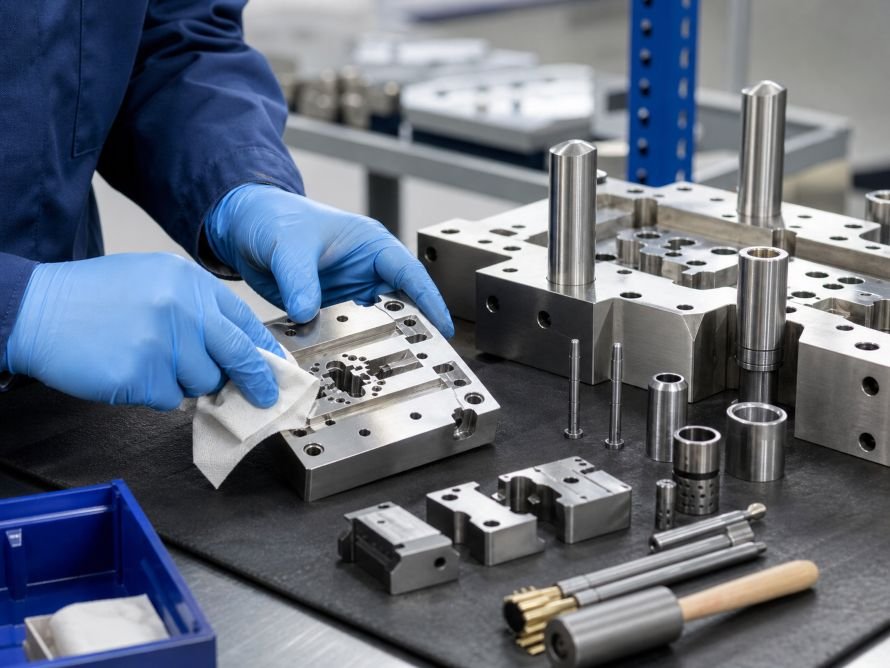
Quality problems can create cost through rework, extra inspection, sorting, delays, and repeat production. Preventive quality planning is usually more efficient than discovering an issue after a large quantity has been produced.
For example, recurring edge issues should be reviewed at the source. The causes behind stamping burrs can involve Mold condition, material behavior, setup, and drawing requirements. Defining the acceptable edge condition before production helps avoid uncertainty later.
A practical quality plan should identify:
- Critical features and acceptance criteria
- Inspection points during setup and production
- Functional gauges or fixtures where appropriate
- Cosmetic or edge-condition requirements
- How nonconforming parts will be contained and reviewed
6. Reduce Unnecessary Secondary Operations
Secondary operations may be required for certain parts, but they should be intentional. Extra finishing, manual handling, assembly, sorting, or packaging steps can add cost and introduce variation.
During DFM review, consider whether the part can be designed to:
- Reduce manual handling
- Avoid an unnecessary finishing step
- Improve stackability or automated collection
- Simplify inspection access
- Combine features into a more efficient process sequence
The answer is not always to remove secondary work. Sometimes a controlled secondary step is the best option for a critical application. The key is to make that decision based on function and total project cost.
7. Share Complete RFQ Information Early
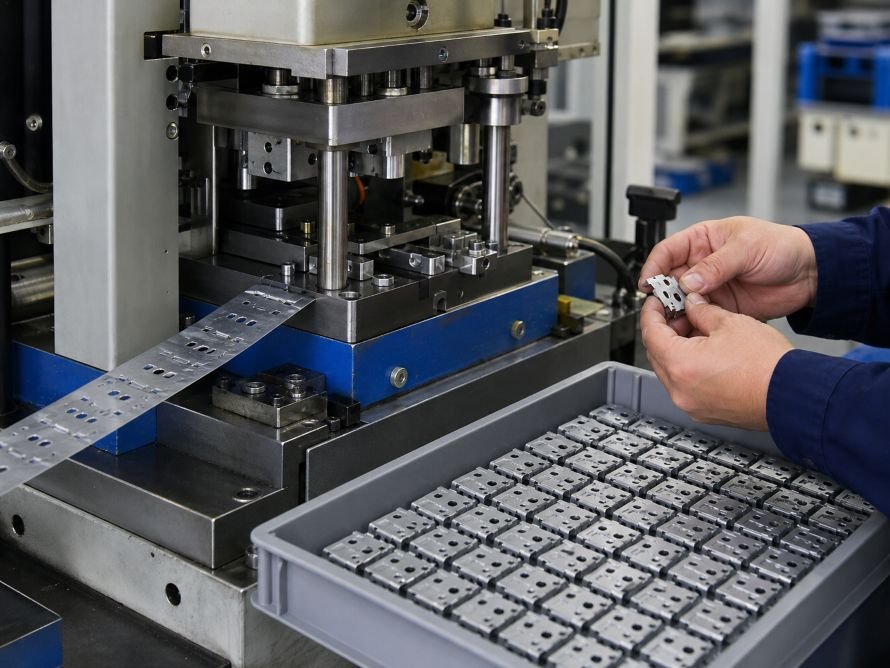
Incomplete information can lead to assumptions, revised quotations, and avoidable engineering cycles. A stronger RFQ helps the manufacturer assess the production route and identify cost-saving opportunities earlier.
Provide the following where available:
- Current drawings and revision status
- Material, thickness, and surface requirements
- Expected annual or batch volume
- Critical dimensions and mating-part details
- Cosmetic, burr, and edge-condition expectations
- Packaging or assembly requirements
- Prototype and production timing needs
The more clearly the part requirement is defined, the easier it is to recommend a manufacturing approach that supports both quality and cost control. Complete RFQ information also makes it easier to compare manufacturers on their engineering response and manufacturing assumptions—not price alone. How to choose a precision metal stamping manufacturer in China.
FAQ
What is the fastest way to reduce metal stamping cost?
Start with a DFM review. Simplifying non-critical features, prioritizing functional tolerances, and improving material use can reduce cost before Mold construction and production begin.
Does a larger volume always lower the unit cost?
Volume can influence the production approach, but the best solution also depends on the part design, material, Mold strategy, quality requirements, and secondary operations.
Can changing material reduce stamping cost?
Potentially, but material changes should be reviewed against functional requirements such as strength, corrosion resistance, conductivity, and forming behavior. A lower-cost material is not a saving if it creates quality or performance issues.
How can buyers avoid unexpected stamping costs?
Provide a complete RFQ, identify critical features clearly, discuss production volume early, and invite DFM feedback before finalizing the design.
Request a Cost-Focused DFM Review
If you are sourcing a custom stamped part, send your drawing, material requirement, expected volume, and critical features to Xiyu Hardware. Our team can review the part for manufacturability, Mold planning, inspection needs, and practical opportunities for metal stamping cost reduction.